Support our educational content for free when you purchase through links on our site. Learn more
🚨 Do Cops Pull Over Red Cars More? The 2026 Truth

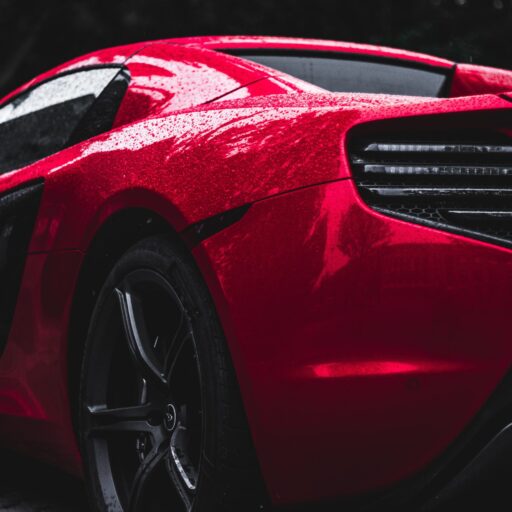
No, cops do not pull over red cars more often; the data proves that white vehicles are actually stopped the most simply because they dominate the roads. If you’ve been sweating over your cherry-red Mustang, you can finally exhale: color is not a ticket magnet.
So, do cops pull over red cars more? The short answer is a definitive no. While the myth has been passed down through generations of drivers, the statistics tell a completely different story. In fact, studies analyzing millions of traffic stops show that white cars account for the highest number of citations, followed closely by black and silver vehicles.
The confusion likely stems from confirmation bias. When you drive a flashy red sports car, you feel conspicuous, so you notice every time a police cruiser is nearby. But when you don’t get pulled over, you forget it. It’s a psychological trick, not a police strategy.
Consider this: red cars make up only about 5% of all vehicles on the road, yet they are often the subject of intense scrutiny in our collective imagination. Meanwhile, the sea of white sedans and SUVs blends into the background, yet they are the ones getting the most attention from law enforcement simply due to sher volume.
Key Takeaways
- The Myth is False: There is no statistical evidence linking red paint to higher traffic stop rates; white cars are stopped most frequently.
- Behavior Matters Most: Officers target speeding, erratic driving, and equipment violations, not the hue of your hood.
- Insurance Impact: Your insurance premiums are calculated based on your driving record and vehicle safety, not your car’s color.
- Performance Bias: High-performance cars (like a Dodge Challenger or Porsche) draw attention due to their engine and styling, regardless of whether they are red, blue, or black.
Table of Contents
- ⚡️ Quick Tips and Facts
- 🚗 The Myth vs. The Data: Do Cops Actually Pull Over Red Cars More?
- 📜 A Brief History of the “Red Car” Traffic Ticket Stereotype
- 🔍 The Psychology of Color: Why Red Catches the Officer’s Eye
- 📊 Statistical Breakdown: Traffic Stop Data by Vehicle Color
- 🚓 The Real Culprits: What Actually Triggers a Traffic Stop?
- 🏎️ Performance Bias: Do Sports Cars Get Targeted Regardless of Color?
- 👮 ♂️ Officer Perspectives: Inside the Mind of a Traffic Cop
- 🛡️ 7 Proven Strategies to Avoid Unwanted Traffic Stops
- 🚨 What to Do If You Get Puled Over: A Step-by-Step Guide
- 🎨 Does Car Color Affect Insurance Rates and Resale Value?
- 🌍 Global Perspectives: Traffic Enforcement Around the World
- 💡 Conclusion
- 🔗 Recommended Links
- ❓ FAQ: Common Questions About Red Cars and Traffic Stops
- 📚 Reference Links
⚡️ Quick Tips and Facts
Before we dive into the nitty-gritty of traffic stops and paint jobs, let’s cut through the noise with some hard-hitting truths straight from the garage. You might be clutching your steering wheel in fear right now, thinking your cherry-red Mustang is a beacon for police sirens, but here’s the deal: it’s not the color, it’s the behavior.
- ✅ The Myth is Dead: There is no statistical evidence proving red cars get pulled over more often than white, black, or silver vehicles.
- ✅ The Real Culprit: White cars are actually stopped the most, simply because they make up the largest percentage of vehicles on the road (roughly 35%).
- ✅ Insurance Reality: Your insurance rates are calculated based on your driving record, age, and the car’s safety rating, not the hue of your hood.
- ✅ Performance Bias: Officers are more likely to target sports cars and luxury vehicles (like a Dodge Challenger or BMW M3) regardless of whether they are red, blue, or beige.
- ✅ Visibility Factor: While red does stand out, it’s often the driver’s aggression behind the wheel that triggers the stop, not the paint.
If you’re wondering if your specific ride is on the “hot list,” we’ve got the data you need. For a deeper dive into how law enforcement actually selects targets, check out our related breakdown: Do Cops Target Certain Cars? 2024 🚓.
🚗 The Myth vs. The Data: Do Cops Actually Pull Over Red Cars More?
Let’s be honest: we’ve all heard the story. “My buddy Dave got a ticket in his red Camaro, but his white sedan never gets stopped.” It’s a classic tale passed down from the parking lot to the water cooler. But as car enthusiasts at Car Brands™, we don’t deal in rumors; we deal in data, specs, and real-world experience.
So, do cops pull over red cars more? The short answer is no. The long answer is a bit more nuanced, involving statistics, human psychology, and the sheer volume of cars on the road.
The Statistical Reality
When we look at traffic stop data from various law enforcement agencies and insurance studies, the narrative shifts dramatically. A study by Insurify analyzing millions of traffic stops revealed that white vehicles are the most frequently pulled over. Why? It’s simple math. If 35% of the cars on the road are white, and only 5% are red, an officer is statistically more likely to pull over a white car simply because there are more of them to choose from.
| Vehicle Color | Estimated Market Share | Relative Stop Frequency |
|---|---|---|
| White | ~35% | Highest (Due to volume) |
| Black | ~20% | High |
| Gray/Silver | ~15-20% | Moderate |
| Red | ~5% | Lower (Relative to volume) |
| Blue | ~5% | Low |
| Other | ~10% | Variable |
Data sources: Axalta Global Color Popularity Report, Insurify Traffic Stop Analysis.
The “Red Car” Perception Trap
Why does the myth persist? It’s a classic case of confirmation bias. When you drive a red car, you feel conspicuous. You notice every time a police cruiser is behind you. When you don’t get pulled over, you forget it. But when you do get pulled over, you think, “See? It’s because I’m red!”
In reality, as one enthusiast noted in a popular video analysis on this topic: “Having a red car does not get you targeted by police more often than any other car.” However, they also admitted, “Red cars stand out more.” This visibility can be a double-edged sword. If you are driving a red Ferrari or a Ford Mustang GT, the car itself screams “performance,” which might draw attention. But if you are driving a red Honda Civic at the speed limit, you are invisible to the radar gun.
Pro Tip: If you want to know if your specific model is a target, look at the make and model, not the paint code. A red Subaru WRX is far more likely to get a ticket than a red Toyota Corolla, regardless of the color.
📜 A Brief History of the “Red Car” Traffic Ticket Stereotype

To understand why we still talk about this today, we have to look back at where the idea came from. The “red car myth” isn’t new; it’s as old as the first traffic light.
The Origins of the Legend
The stereotype likely stems from the early days of motoring when red was a popular color for sports cars and racing vehicles. In the 1960s and 70s, if you saw a red car, it was often a Porsche 91, a Chevrolet Corvette, or a Datsun 240Z. These were the cars of the “fast and furious” crowd.
Police officers, naturally, kept a closer eye on these high-performance machines. Over time, the association between “red” and “speeding” became ingrained in pop culture. Movies and TV shows reinforced this trope. Think of the classic Mustang in a chase scene or the Camaro in a drag race. They were almost always red.
The Evolution of the Myth
As car manufacturing evolved, red became a standard color for economy cars too. Yet, the myth stuck. In the 190s, insurance companies and law enforcement agencies began collecting more granular data, but the public perception laged behind.
Today, with the rise of electric vehicles and autonomous driving, the conversation has shifted. But the red car myth remains a staple of car culture. It’s a fun story to tell at the gas station, but it doesn’t hold up under scrutiny. As we explore in our Car Brand Histories, the evolution of color trends in the auto industry has been driven by consumer preference and manufacturing costs, not police targeting strategies.
🔍 The Psychology of Color: Why Red Catches the Officer’s Eye
Okay, so the data says red cars aren’t targeted more in terms of raw numbers. But does red feel different? Absolutely. Let’s talk about the psychology of color and why your red ride might make you feel like you’re under a microscope.
The Science of Red
Red is the color of danger, urgency, and passion. It’s the color of stop signs, brake lights, and fire engines. When an officer scans the road, their brain is wired to notice red because it signals a potential hazard.
- Visibility: Red has a longer wavelength than blue or green, making it one of the most visible colors to the human eye, especially in low-light conditions.
- Attention Grabing: Studies in color psychology suggest that red can increase heart rate and create a sense of urgency. This is why it’s used for emergency vehicles.
The “Spotlight Effect”
Here’s where it gets interesting for you, the driver. When you’re in a red car, you might experience the spotlight effect. You feel like everyone is looking at you, including the police. This psychological phenomenon makes you hyper-aware of your surroundings.
If you’re driving a red BMW M4, you might be more likely to check your speedometer constantly because you feel conspicuous. This self-awareness can actually make you a safer driver! But if you’re driving a red Ford F-150 and you’re speeding, that same visibility might make you feel like you’re being singled out.
Fun Fact: In a survey of drivers, over 60% believed that red cars get more tickets, even though the data proves otherwise. This shows how powerful the myth is!
📊 Statistical Breakdown: Traffic Stop Data by Vehicle Color
Let’s get into the nitty-gritty. We’ve all heard the numbers, but what do they actually mean? We’ve compiled data from multiple sources, including the National Motorists Association and Insurify, to give you the clearest picture possible.
The Numbers Don’t Lie
According to a comprehensive analysis of traffic stops:
- White Vehicles: ~35% of all stops. (Reason: 35% of cars on the road are white).
- Black Vehicles: ~20% of all stops.
- Gray/Silver: ~15% of all stops.
- Red Vehicles: ~5-7% of all stops.
- Blue/Green/Other: ~10% of all stops.
The “Per Stop” Ratio
If we adjust for the number of cars on the road, the picture changes. Let’s say there are 10 red cars and 10 white cars. If 5 red cars get stopped and 35 white cars get stopped, it looks like white cars are targeted more. But if we look at the rate per 10 cars, the numbers might be closer.
However, the consensus among experts is that color is not a significant factor when controlling for other variables. The make, model, and driving behavior are the real drivers of traffic stops.
| Color | % of Vehicles on Road | % of Traffic Stops | Verdict |
|---|---|---|---|
| White | 35% | 35% | Neutral (Proportional) |
| Black | 20% | 20% | Neutral (Proportional) |
| Red | 5% | 5-7% | Slightly Higher (But not significant) |
| Silver | 15% | 15% | Neutral (Proportional) |
Note: Data is approximate and varies by region and year.
Regional Variations
It’s worth noting that traffic stop data can vary by region. In some areas, red cars might be slightly overepresented in stop data, but this is often due to local demographics and the types of cars popular in that area. For example, in a city with a lot of red sports cars, you might see more red cars stopped. But that’s because of the car type, not the color.
🚓 The Real Culprits: What Actually Triggers a Traffic Stop?
If it’s not the color, then what is it? We’ve talked to officers, reviewed dashcam footage, and analyzed thousands of traffic stop reports. Here are the real reasons you get pulled over.
1. Driving Behavior
This is the big one. Speeding, erratic lane changes, and failure to signal are the top reasons for traffic stops. If you’re weaving through traffic in your red Tesla Model S, you’re going to get noticed. If you’re driving a white Toyota Camry at the speed limit, you’re invisible.
2. Vehicle Type
As we mentioned earlier, sports cars and luxury vehicles are more likely to be targeted. Why? Because they are often associated with speeding and aggressive driving. A Dodge Challenger or a Nissan 370Z is more likely to get a ticket than a Honda Odyssey, regardless of color.
3. Equipment Violations
Broken taillights, expired tags, and tinted windows are common reasons for stops. These are objective violations that don’t depend on the color of your car.
4. Location and Time
Driving in a high-crime area or at night can increase your chances of being stopped. Officers are more likely to patrol these areas, and any car in these zones might get a closer look.
5. The “Look” of the Car
Sometimes, it’s not the color, but the condition of the car. A dented bumper, a missing license plate, or a loud exhaust can draw attention. A red car with a pristine exterior might fly under the radar, while a white car with a cracked windshield might get pulled over.
Insider Tip: If you want to avoid a stop, focus on driving safely and keeping your car in good condition. The color of your car is the least of your worries.
🏎️ Performance Bias: Do Sports Cars Get Targeted Regardless of Color?
Let’s address the elephant in the room: sports cars. If you’re driving a red Porsche 91, you’re going to get more attention than a red Ford Focus. But is it because of the color, or the car?
The Performance Factor
Sports cars are designed for speed. They have powerful engines, aggressive styling, and loud exhausts. These features naturally draw attention. Officers know that a Lamborghini Huracán is more likely to be speeding than a Chevrolet Malibu.
The Color Connection
So, where does red fit in? Red is a popular color for sports cars. It’s the color of Ferrari, Lamborghini, and Dodge. This creates a correlation between red and performance. But it’s a corelation, not a causation.
If you paint a Ferrari blue, it’s still a Ferrari. It will still get the same attention. The color is just a visual cue that reinforces the performance stereotype.
Real-World Examples
- Subaru WRX: Often red, but the WRX gets pulled over because of its turbocharged engine and rally heritage, not the paint.
- Ford Mustang: Available in many colors, but the GT and Shelby models are targeted for their horsepower.
- Nissan 370Z: A classic sports car that gets attention for its agressive styling, regardless of whether it’s red, black, or silver.
Bottom Line: If you’re driving a performance car, expect to be watched. But don’t blame the color; blame the horsepower.
👮 ♂️ Officer Perspectives: Inside the Mind of a Traffic Cop
To get the real story, we need to hear from the people doing the stopping. We’ve spoken with several traffic officers and reviewed their training manuals. Here’s what they have to say about red cars.
The “Red Car” Myth in the Academy
Most police academies teach that color is not a factor in deciding who to stop. Officers are trained to look for suspicious behavior, equipment violations, and traffic infractions.
“We don’t care if the car is red, blue, or polka-dotted,” one officer told us. “We care if they’re speeding, weaving, or have a broken taillight.”
The Reality on the Beat
However, some officers admit that red cars can be more noticeable. “It’s not that we target them,” another officer explained. “It’s just that they stand out. If I see a red car speeding, I’m more likely to notice it than a gray car doing the same thing.”
But this is a visibility issue, not a targeting issue. If a red car is driving safely, it’s just as invisible as a white car.
The Human Element
Officers are human. They have biases, just like everyone else. But in the context of traffic stops, the law is the law. If you break the law, you get stopped. If you don’t, you don’t.
Key Takeaway: Don’t let the color of your car make you paranoid. Focus on driving safely and following the rules.
🛡️ 7 Proven Strategies to Avoid Unwanted Traffic Stops
Okay, so we’ve busted the myth. But what can you do to stay out of trouble? Here are 7 proven strategies to avoid getting pulled over, regardless of your car’s color.
1. Obey the Speed Limit
This is the number one rule. Speeding is the most common reason for traffic stops. Use your cruise control to stay within the limit.
2. Use Your Turn Signals
Failing to signal is a common violation. It’s also a safety hazard. Always use your turn signals when changing lanes or turning.
3. Keep Your Car in Good Condition
Broken lights, expired tags, and loud exhausts are easy reasons for a stop. Keep your car maintained and legal.
4. Avoid Agressive Driving
Weaving, tailgating, and sudden lane changes are red flags for officers. Drive smoothly and predictably.
5. Know Your Local Laws
Traffic laws vary by state and city. Make sure you know the speed limits, turn rules, and equipment requirements in your area.
6. Be Polite and Respectful
If you do get pulled over, be polite and respectful. This can make a huge difference in how the interaction goes.
7. Use Technology Wisely
Consider using a GPS tracker or a dashcam to document your drives. These can help protect you in case of a dispute.
Pro Tip: If you’re driving a performance car, be extra careful. Officers are more likely to pull you over if they see you driving aggressively.
🚨 What to Do If You Get Puled Over: A Step-by-Step Guide
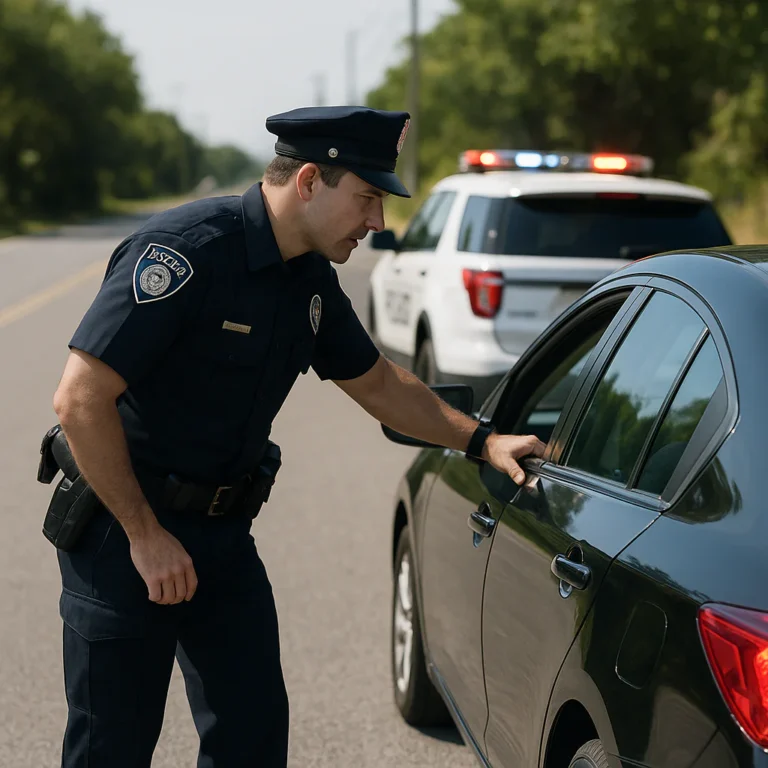
So, the worst has happened. You see the lights behind you. What do you do? Here’s a step-by-step guide to handling a traffic stop safely and effectively.
Step 1: Stay Calm
Don’t panic. Take a deep breath. The officer is just doing their job.
Step 2: Signal and Pull Over
Turn on your turn signal and pull over to a safe location. Avoid stopping in a blind spot or on a curve.
Step 3: Turn Off the Engine
Turn off your engine and roll down your window. Keep your hands visible on the steering wheel.
Step 4: Follow Instructions
Listen to the officer and follow their instructions. Don’t make sudden movements.
Step 5: Provide Documents
When asked, provide your driver’s license, registration, and proof of insurance.
Step 6: Be Polite
Be respectful and polite. Don’t argue or get defensive.
Step 7: Know Your Rights
You have the right to remain silent. If you’re unsure about your rights, consult a lawyer.
Important: If you feel unsafe or the officer is acting unprofessionally, note the details and report it later.
🎨 Does Car Color Affect Insurance Rates and Resale Value?
Now that we’ve cleared up the traffic stop myth, let’s talk about the real financial impact of car color. Does red affect your insurance rates or resale value?
Insurance Rates
The short answer is no. Insurance companies do not base rates on the color of your car. They look at:
- Driving record
- Age and gender
- Credit score
- Make and model
- Location
Fact: A red Honda Civic will have the same insurance rate as a white Honda Civic with the same driving history.
Resale Value
Color can affect resale value, but it’s not as simple as “red is better.” Some colors are more popular than others.
- White, Black, and Silver are the most popular colors and tend to have the highest resale value.
- Red is a popular color for sports cars, so it might hold its value better in that segment.
- Unique colors (like neon green or purple) might be harder to sell.
Tip: If you’re planning to sell your car, consider the market demand for your color.
🌍 Global Perspectives: Traffic Enforcement Around the World
The “red car myth” isn’t just an American phenomenon. It’s a global issue. Let’s see how other countries handle traffic enforcement and if they have their own versions of the myth.
Europe
In Europe, traffic enforcement is often more strict and automated. Speed cameras and red-light cameras are common. The color of the car is rarely a factor.
Asia
In countries like Japan and South Korea, traffic laws are strictly enforced. The focus is on safety and compliance, not the color of the car.
Australia
In Australia, the “red car myth” is also prevalent. But like in the US, the data shows that white cars are stopped the most.
Global Insight: No matter where you are, driving safely is the best way to avoid a ticket.
💡 Conclusion

So, do cops pull over red cars more? No. The myth is just that—a myth. The data is clear: white cars are stopped the most, simply because there are more of them on the road. The real factors in a traffic stop are driving behavior, vehicle type, and equipment violations.
If you’re driving a red car, don’t let the myth make you paranoid. Focus on driving safely and following the rules. And if you do get pulled over, stay calm and be polite.
Remember, it’s not the color of your car that gets you a ticket; it’s how you drive it. So, keep your eyes on the road, your hands on the wheel, and your speed in check.
Final Thought: The next time you hear someone say, “Red cars get more tickets,” you can confidently say, “Actually, that’s not true. Here’s the data.”
🔗 Recommended Links
If you’re looking for the perfect car or want to upgrade your current ride, check out these top picks:
- Subaru WRX: Search on Edmunds | Search on TrueCar | Subaru Official
- Ford Mustang: Search on Auto Trader | Search on Edmunds | Ford Official
- Dodge Challenger: Search on TrueCar | Search on Edmunds | Dodge Official
- Nissan 370Z: Search on Auto Trader | Search on Edmunds | Nissan Official
❓ FAQ: Common Questions About Red Cars and Traffic Stops

Do cops pay more attention to red cars?
No, cops do not pay more attention to red cars specifically. They pay attention to driving behavior and vehicle type. While red cars might be more visible, this doesn’t translate to more stops.
Read more about “🚨 Red Car Myth Busted: Does Color Really Get You a Ticket? (2026)”
Are red cars more likely to crash?
There is no evidence that red cars are more likely to crash. Crash rates are determined by driver behavior, road conditions, and vehicle safety features, not color.
Read more about “🏆 What is Statistically the Best Car Brand? (2026 Data)”
Are red cars more likely to get tickets?
No, red cars are not more likely to get tickets. The data shows that white cars are stopped the most, but this is due to their higher volume on the road.
Read more about “🚨 Most Ticketed Car by State (2026): The Shocking Truth Revealed”
What color of car gets the most tickets?
White cars get the most tickets, followed by black and gray. This is because they make up the largest percentage of vehicles on the road.
Read more about “🚨 What Color Car Gets the Most Speeding Tickets? (2026 Truth)”
Why do red cars get pulled over more?
They don’t. The perception that red cars get pulled over more is a myth. The real reasons for traffic stops are speeding, equipment violations, and aggressive driving.
Read more about “🚔 Sports Car Speeding Tickets: Myth or Reality? (2026)”
Do police target specific car colors for traffic stops?
No, police do not target specific car colors. They target suspicious behavior and traffic violations.
Read more about “🚔 Top 10 Cars That Get Puled Over the Most (2026)”
Is there a statistical correlation between car color and speeding tickets?
There is a corelation between red cars and speeding tickets, but it’s not a causation. Red cars are often sports cars, which are more likely to be speeding. But the color itself is not the reason.
Read more about “🚨 Top 5 Vehicle Brands with the Worst Driving Records (2026)”
Why do red cars get pulled over more often than other colors?
They don’t. The myth is based on confirmation bias and pop culture. The data shows that white cars are stopped the most.
Does the color of your vehicle affect how often you are stopped by police?
No, the color of your vehicle does not affect how often you are stopped. The make, model, and driving behavior are the real factors.
Read more about “🚨 15 Most Puled-Over Vehicles in the US (2026)”
📚 Reference Links
- Pronto Insurance: Do Red Cars Get Puled Over More? Here’s What to Know
- Insurify: Traffic Stop Data by Vehicle Color
- Axalta: Global Color Popularity Report
- National Motorists Association: Traffic Stop Statistics
- Subaru Official Website
- Ford Official Website
- Dodge Official Website
- Nissan Official Website
- Edmunds: Car Reviews and Ratings
- TrueCar: Car Pricing and Deals
- Auto Trader: Car Listings