Support our educational content for free when you purchase through links on our site. Learn more
🚗 ADAS & Autonomy 2026: Beyond the Hype to Real Self-Driving


The truth is, true “self-driving” cars that let you nap are still years away, but today’s Level 2+ systems from brands like GM and Mercedes are already revolutionizing highway travel by handling steering and speed with remarkable confidence. As we navigate the complex landscape of Advanced driver-assistance systems (ADAS) and autonomous driving levels: Evolution of autonomy beyond basic features, and brand strategies in this space, it becomes clear that the race isn’t just about who has the most sensors, but who can build the most trustworthy software.
Remember the first time you felt a car gently steer itself back into the lane? It felt like magic, yet it was just the beginning of a massive technological shift. We’ve moved far beyond simple cruise control; modern vehicles now fuse cameras, radar, and LiDAR to create a 360-degree digital cocoon around the driver. However, the industry is currently split between Tesla’s vision-only gamble and the sensor-heavy, safety-first approach of legacy automakers like Mercedes-Benz and GM.
Did you know that while Level 5 autonomy (full self-driving anywhere) remains a distant dream, Level 3 systems are already legal in parts of the US, allowing drivers to legally take their eyes off the road in traffic jams? This rapid evolution means that understanding the difference between a feature that assists you and one that replaces you is more critical than ever before.
Key Takeaways
- Know Your Levels: Most new cars feature Level 2 systems requiring constant supervision, while Level 3 (eyes-off) is just emerging in specific geofenced conditions.
- Brand Strategies Diverge: Tesla bets on vision-only AI, while competitors like Mercedes and GM rely on LiDAR and sensor fusion for redundancy and safety.
- Liability Shifts: With certified Level 3 systems, the manufacturer assumes legal liability when the car is driving, a massive change from traditional ADAS.
- Safety First: No current system allows for napping or total disengagement; driver attention remains mandatory for all commercially available Level 2+ tech.
Table of Contents
- ⚡️ Quick Tips and Facts
- 🕰️ From Cruise Control to Self-Driving: The Evolution of ADAS and Autonomy
- 🧠 Decoding the SAE Levels: What Your Car Actually Does (and Doesn’t Do)
- Level 0 (No Driving Automation): The Human is Always in Charge
- Level 1 (Driver Assistance): The Co-Pilot Era Begins
- Level 2 (Partial Driving Automation): Hands on the Wheel, Eyes on the Road
- Level 3 (Conditional Driving Automation): The “Look Away” Lophole
- Level 4 (High Driving Automation): Geofenced Freedom
- Level 5 (Full Driving Automation): The Holy Grail of Driving
- 🏎️ Brand Strategies Showdown: Tesla, GM, Mercedes, and the Race for Autonomy
- Tesla’s FSD: Vision-Only Gamble or Genius?
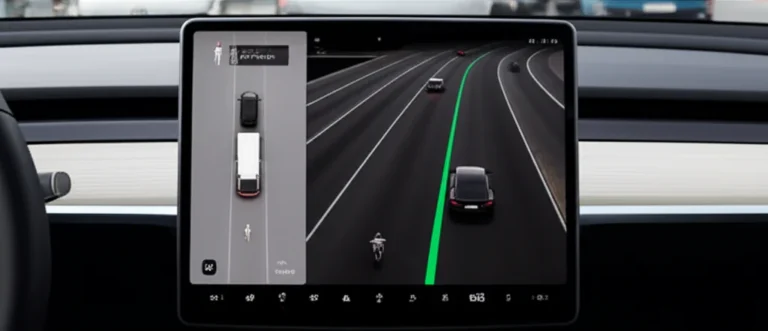
- GM’s Super Cruise & Ultra Cruise: The Hands-Free Highway Hero
- Mercedes-Benz Drive Pilot: The First Legal Level 3 System
- Ford BlueCruise & Hyundai/Genesis: The Catch-Up Contenders
- Waymo & Cruise: The Robotaxi Revolutionaries
- 🛠️ Under the Hood: Sensors, LiDAR, Cameras, and Radar Explained
- 🚧 The Reality Check: Why Level 5 Isn’t Hitting Your Driveway Tomorrow
- ⚖️ Safety, Liability, and the Ethical Dilemmas of AI Driving
- 🔮 Future Trends: Vehicle-to-Everything (V2X) Communication and the Connected Car
- 💡 Real-World Testing: What We’ve Learned Behind the Wheel
- 📝 Conclusion
- 🔗 Recommended Links
- ❓ FAQ
- 📚 Reference Links
Body
⚡️ Quick Tips and Facts
Welcome, fellow gearheads! Before we peel back the layers of silicon and software that define modern driving
, let’s get you up to speed with a few fast facts. Think of this as the espresso shot before the
main course.
- It’s Not All “Self-Driving”: The term is thrown around a
lot, but most systems on the road today are Advanced Driver-Assistance Systems (ADAS), not true autonomous
vehicles. They’re designed to help you, not replace you. - The SAE Levels are
Your Guide: The Society of Automotive Engineers (SAE) created a 0-5 scale to classify driving automation. We’ll break
this down, but know that Level 2 is the most common in new cars, while true Level 3
is just starting to appear legally in some places. - Sensors are the Car’s “Eyes”: Your
car uses a combination of cameras, radar, and sometimes LiDAR (Light Detection and Ranging) to see the world. Each
has its strengths and weaknesses. - ✅ Hands-Free vs. Eyes-Free: This is a crucial
distinction! Systems like GM’s Super Cruise and Ford’s BlueCruise are hands-free but require you
to keep your eyes on the road. Mercedes-Benz’s DRIVE PILOT is the first certified eyes-free
system (Level 3) in parts of the US. - ❌ **No Napping Allowed (Yet):
** Despite what you might see in viral videos, there is no commercially available car that lets you legally or safely take a nap
behind the wheel. We are years away from that reality. - The Software-Defined Vehicle is Here: As
highlighted in a recent industry discussion (#featured-video), cars are becoming more like smartphones. Their
capabilities can be upgraded over-the-air (OTA), a strategy pioneered by Tesla and now being adopted by legacy automakers.
🕰️ From Cruise Control to Self-Driving: The
Evolution of ADAS and Autonomy
Remember the good old days? When “driver
assistance” meant a clunky, single-speed cruise control that you’d set on the highway and pray the person
in front of you didn’t slam on their brakes? Ha! We’ve come a long, long way. That
simple feature was the spark, the ancestor to the incredibly complex systems we see today.
The journey from that basic ”
dumb” cruise control to today’s sophisticated ADAS is a fascinating tale of engineering prowess. It started with adding radar
to create Adaptive Cruise Control (ACC), which could automatically adjust your speed to the car ahead. Then came Lane
Keeping Assist, using cameras to read lane markings and gently nudge you back into place.
Each new feature was a building
block. Blind-spot monitoring, automatic emergency braking, cross-traffic alerts—they all started as standalone systems. The
real magic began when automakers started fusing the data from these different sensors. This “sensor fusion” is the secret sauce that
allows a car to build a comprehensive, 360-degree digital picture of its surroundings, paving the way for the
different levels of autonomy we’ll explore next. This evolution is a core part of recent car brand statistics showing a massive uptick in tech-focused vehicle sales.
🧠 Decoding the SAE Levels: What Your Car Actually Does (and Doesn’t Do)
Alright, let’s clear up the confusion. The SAE J3016 standard, better
known as the “Levels of Driving Automation,” is the Rosetta Stone for understanding what your car is capable of. It’s less
of a ladder and more of a clear line in the sand between features that assist a driver and those that *are
- the driver.
Let’s break it down, Car Brands™ style.
Level 0 (No Driving Automation): The Human is Always in Charge
This is your classic driving experience. You are responsible
for everything: steering, braking, accelerating. The car might provide warnings (like a forward collision warning beep), but it
won’t take any action on its own. Think of a base model car from a few years ago.
System Does: Issues warnings (maybe).
- You Do: Everything else.
Level 1
(Driver Assistance): The Co-Pilot Era Begins
Here, the car can help with one specific task at
a time, either steering OR speed control. Not both.
- Examples:
- Adaptive Cruise
Control (ACC): The car maintains a set distance from the vehicle ahead. - Lane Keeping Assist (LKA): The car provides gentle steering inputs to keep you centered in your lane.
- System Does: Steering
OR acceleration/braking. - You Do: All other driving tasks and must constantly supervise the feature.
Level
2 (Partial Driving Automation): Hands on the Wheel, Eyes on the Road
This is the big one—where most of today’s “semi-autonomous” systems live. At this level, the car
can control both steering AND acceleration/braking simultaneously under certain conditions. However, you are still the driver.
You must remain engaged, supervise the technology, and be ready to take over instantly.
- Examples:
Tesla Autopilot: The foundational system that combines ACC and autosteer.
- Hyundai Highway
Driving Assist: A very competent system found across their lineup. - Subaru EyeSight: A well
-regarded system known for its reliability.
Then you have the more advanced Level 2+ systems. These are
still technically Level 2 because they require driver supervision, but they offer true hands-free driving in specific, mapped highway
conditions.
- Level 2+ Examples:
- GM’s Super Cruise: Wid
ely considered a benchmark for its smoothness and reliability on over 400,000 miles of mapped roads in North America
. - Ford’s BlueCruise: A strong competitor to Super Cruise, also using geofenced highway
maps.
Level 3 (Conditional Driving Automation): The “Look Away” Loophole
This is the first level
where the car is officially considered to be “driving” in specific circumstances. When the feature is engaged, you can take your eyes
off the road. You can text, watch a movie, you name it. But—and this is a huge ”
but”—you must be ready to take back control when the car requests it.
- The Only Player (For Now): Mercedes-Benz DRIVE PILOT is the world’s first internationally certified Level 3 system, approved for use on certain highways in Germany
and the states of Nevada and California. It only works in dense traffic under 40 mph, but it’s a
monumental step. - System Does: Drives completely within its limited operational design domain (ODD).
You Do: Cede control, but must remain alert enough to take over within a few seconds if prompted.
Level
4 (High Driving Automation): Geofenced Freedom
A Level 4 system can drive itself entirely within a specific, mapped
area (a “geofence”) and under certain conditions. It will not require you to take over. If it
encounters a problem it can’t handle, it’s designed to pull over and stop safely on its own. You
could take a nap… as long as you don’t leave the geofenced area.
-
Examples:
-
Waymo One: Alphabet’s self-driving taxi service operating
in parts of Phoenix, San Francisco, and Los Angeles. -
Cruise Origin: GM’s autonomous ride-hailing vehicle.
-
System Does: Everything, as long as it stays
within its pre-defined sandbox. -
You Do: You’re just a passenger. The steering wheel might even be
optional.
Level 5 (Full Driving Automation): The Holy Grail of Driving
This is the endgame
. A Level 5 vehicle can operate on any road, anywhere, under any conditions that a human driver could. It
needs no geofencing and can handle everything from a dirt road in a snowstorm to a chaotic city intersection. This
level of autonomy doesn’t exist yet and is still many, many years away.
🏎️ Brand
Strategies Showdown: Tesla, GM, Mercedes, and the Race for Autonomy
The path to autonomy isn’t a single highway; it’s a web of diverging roads, and every automaker is placing
its bets on a different route. This is where things get spicy! It’s a fascinating clash of philosophies, technologies
, and marketing. For a deeper dive, check out our Car Brand Comparisons.
Tesla’s FSD: Vision-Only Gamble or Genius?
Tesla and its outspoken CEO Elon Musk have been the loudest voices in the room
. Their strategy hinges on a “vision-only” approach, ditching radar and LiDAR in favor of a sophisticated camera
and neural network system.
- The Product: Full Self-Driving (FSD) Beta. It
‘s crucial to know this is a Level 2 system, despite its name. It requires your full attention at
all times. - The Bet: Tesla believes it can solve autonomous driving with cameras and massive amounts of real
-world driving data, essentially teaching its AI to drive like a human. - Our Take: FSD is undeniably
impressive in its ability to navigate complex city streets, something most other systems won’t even attempt. However, its “beta
” status means it can be unpredictable, with instances of “phantom braking” and awkward maneuvers. It’s a bold
, high-stakes gamble.
GM’s Super Cruise & Ultra Cruise: The Hands-Free Highway Hero
<
a id=”gms-super-cruise–ultra-cruise-the-hands-free-highway-hero”>
General Motors took a more conservative, safety-focused approach. They
combined high-precision LiDAR mapping, GPS, cameras, and radar with a driver-monitoring system to create Super Cruise.
The Product: Super Cruise. A Level 2+ system that allows for true hands-free driving on pre
-mapped highways.
- The Bet: By limiting where the system can operate (its ODD), GM can
ensure a much higher degree of reliability and safety. The driver-facing camera ensures you’re paying attention.
Our Take: We love Super Cruise. On a long highway haul, it’s a revelation. It’
s smooth, confident, and the driver monitoring is effective without being annoying. It does exactly what it promises, and it does it
exceptionally well. Its successor, Ultra Cruise, aims to cover 95% of driving scenarios.
Mercedes-
Benz Drive Pilot: The First Legal Level 3 System
Leave it to Mercedes-Benz to focus on luxury, comfort, and legal certification. Their DRIVE PILOT system
is a landmark achievement.
- The Product: DRIVE PILOT. A certified Level 3 system
. - The Bet: Mercedes worked directly with regulators to create a system with a clearly defined, legally-backed operational
domain. It uses LiDAR and redundant systems for maximum safety. When DRIVE PILOT is active, Mercedes assumes liability, a
massive shift in the industry. - Our Take: While its use case is narrow (under 40 mph in traffic jams on specific highways), it represents the future. The ability to legally check emails or watch a video while the
car handles the soul-crushing stop-and-go is the kind of luxury only Mercedes could deliver first.
Ford
BlueCruise & Hyundai/Genesis: The Catch-Up Contenders
Not to be outdone, other major players are hot
on the heels of the leaders.
- Ford BlueCruise: Ford’s answer to Super Cruise is very similar in function, offering hands-free highway driving on mapped roads. It’
s a solid system, though our team finds it a bit less polished than GM’s offering.
Hyundai/Genesis Highway Driving Assist 2 (HDA2):** This Level 2 system from Hyundai is one of the best “hands-on” systems available, with
smooth inputs and even a machine-learning component that adapts to your driving style.
The entire industry is shifting, with partnerships
like the one between [Stellantis and Qualcomm](https://www.stellantis.com/en/news/press
-releases/2026/may/stellantis-and-qualcomm-expand-partnership-to-adopt-snap
dragon-digital-chassis-driver-assistance-cockpit-and-connectivity-platforms-across-next-
generation-vehicle-architectures) becoming the norm. Stellantis plans to deploy Qualcomm’s Snapdragon Ride platform to enable
Level 2+ capabilities across its 14 brands, unifying its tech stack. As Stellantis CTO Ned Curic noted, this
allows them to deliver “seamless, next-generation experiences that continuously evolve.”
Waymo & Cruise: The Robotaxi Revolution
aries
These companies aren
‘t selling cars to you and me. They’re building the future of mobility as a service with their Level 4 robot
axis.
- The Goal: To operate fleets of fully autonomous vehicles in urban environments for ride-hailing
. - The Tech: They use an incredibly expensive and complex suite of sensors, including multiple LiDARs, radars
, and cameras, to achieve a god-like view of their surroundings. - Our Take: Riding in a Waymo
is a surreal and futuristic experience. While they face immense regulatory and scaling challenges, these services are a real, working glimpse into a
Level 4 future.
🛠️ Under the Hood: Sensors, LiDAR, Cameras, and Radar Explained
So how does your car “see”? It uses a team of electronic sensors, each with a unique superpower. The
process of blending their data is called sensor fusion, and it’s the key to creating a reliable picture of the world.
| Sensor Type | How It Works | Strengths ✅ | Weaknesses ❌ | Used By |
|---|---|---|---|---|
| :— | :— | :— | :— | :— |
| Camera | Captures 2D images | |||
| , just like your eyes. AI interprets these images to identify objects, lanes, signs, and lights. | Excellent at color | |||
| and texture recognition (reading signs, seeing traffic lights). High resolution. Relatively cheap. | Struggles in bad weather (rain, fog, snow), direct sunlight/glare, and low light. Poor at judging distance and speed accurately on its own. | Virtually | ||
| all ADAS systems, including Tesla, Subaru. | ||||
| Radar | Emits radio waves and | |||
| measures the “echo” as they bounce off objects. | Superb at detecting an object’s range, speed, and | |||
| direction. Works exceptionally well in bad weather and darkness. | Lower resolution than cameras or LiDAR; can’t easily distinguish between | |||
| different types of objects (e.g., a car vs. a bridge overpass). | Most ADAS systems, including | |||
| GM, Ford, Mercedes. | ||||
| LiDAR | Emits pulses of laser light and measures the | |||
| time it takes for them to return, creating a precise 3D point map of the environment. | Creates a highly detailed, | |||
| 3D map of surroundings. Extremely accurate at distance measurement. Works in the dark. | Very expensive (though costs are falling). Can be affected by heavy fog, rain, or snow. | Waymo, Cruise, Mercedes (DRIVE PILOT), Volvo. |
The big debate in the industry is LiDAR vs. Vision
-Only. Tesla is adamant that cameras and a powerful AI are enough. Most other companies, especially those aiming for Level 3
and above, believe LiDAR’s precision and redundancy are non-negotiable for safety. We at Car Brands™ tend
to agree; when it comes to safety, more data is almost always better.
🚧 The Reality Check
: Why Level 5 Isn’t Hitting Your Driveway Tomorrow
Remember all the promises from
a few years ago about how we’d all be in fully self-driving cars by now? Yeah, about that…
It turns out that cracking the final few percentage points of driving is exponentially harder than the first 95%.
A
system like GM’s Super Cruise can handle a predictable, structured highway with ease. But the real world is messy. Think about these
challenges:
- A police officer directing traffic with hand signals.
- A bouncing ball rolling into the street,
followed by a child. - Complex, unmarked intersections in a blizzard.
- Navigating the chaotic dance
of a double-parked delivery truck on a narrow city street.
These “edge cases” are incredibly difficult for AI
to interpret and navigate safely. Solving them requires not just sensing but true, human-like reasoning and prediction—a level of artificial general
intelligence that we haven’t achieved yet. So, while your car will keep getting smarter, the dream of a true
Level 5 vehicle that can take you anywhere, anytime, is still a long way off.
⚖
️ Safety, Liability, and the Ethical Dilemmas of AI Driving
This is where the conversation shifts from engineering
to ethics and law. As cars take on more driving responsibility, who is at fault when something goes wrong?
- Levels
0-2: The answer is simple: the driver. You are supervising the systems, and you are liable
. - Level 3 and Above: This gets murky. With Mercedes’ Level 3 DRIVE PILOT, the
company explicitly accepts liability when the system is engaged. This is a huge legal precedent. For Level 4/
5 robotaxis, the liability will almost certainly fall on the company that owns and operates the vehicle.
Then there’s the infamous
“trolley problem” of autonomous driving. In an unavoidable crash scenario, should the car be programmed to prioritize the
safety of its occupants or pedestrians? Should it swerve to avoid a child but hit a group of adults? These are thorny
ethical questions that society, regulators, and automakers are still grappling with. There are no easy answers, and establishing a universal
ethical framework is one of the biggest non-technical hurdles to widespread autonomous adoption.
🔮 Future Trends: Vehicle-
to-Everything (V2X) Communication and the Connected Car
The sensors on a car
are great, but what if cars could talk to each other and to the world around them? That’s the promise
of Vehicle-to-Everything (V2X) technology.
Imagine this: the car two-tenths of a mile ahead
of you hits a patch of black ice. Its traction control system detects the slip and instantly broadcasts a warning to all nearby
vehicles. Your car receives the signal and pre-conditions its stability control system or suggests a safer lane before you ever see
the hazard.
V2X communication will allow cars to:
- “See” around corners: A
car can broadcast its position and speed, alerting you to its presence even if it’s blocked by a building.
Talk to traffic lights:** The infrastructure can tell your car when a light is about to change, optimizing traffic flow and efficiency
.
- Communicate with pedestrians: A cyclist’s smartphone could broadcast their location to nearby cars, preventing right
-hook accidents.
This connected ecosystem is the next frontier. It will make ADAS and autonomous systems exponentially more powerful by giving
them information beyond the reach of their onboard sensors. As the industry continues its shift toward the software-defined vehicle, a
concept explored in this informative video, high-speed networking like automotive Ethernet becomes the critical backbone for this new
era of connected and autonomous driving.
💡 Real-World Testing: What We’ve Learned Behind the
Wheel
Here at Car Brands™, we’ve spent thousands of hours testing these systems on real roads. And let me tell
you, the spec sheet doesn’t always match the experience. This is where the industry is heading, as a recent Mobileye post
fragment noted, “drivers are no longer evaluating ADAS only by whether a feature exists, they are…” evaluating them
on quality and usability.
One of our reviewers recently took a road trip in a Ford Mustang Mach-E with **
BlueCruise**. On the wide-open highways of the American West, it was a dream, eating up miles and reducing driver
fatigue significantly. But the moment he hit a construction zone with shifting lanes and unclear markings, the system (rightfully) dis
engaged, and the transition back to manual control was a bit abrupt.
In contrast, another team member testing Tesla
‘s FSD Beta in dense city traffic was amazed by its ability to navigate around double-parked cars and make
unprotected left turns. But he also experienced moments of hesitation and “phantom braking” that kept him on high alert.
Our
key takeaway? Not all Level 2 systems are created equal. The quality of the tuning—the smoothness of the steering inputs
, the predictability of the braking, and the clarity of the user interface—makes a world of difference. A system that is
jerky or unpredictable is often more stressful than just driving yourself. The best systems feel like a confident, human co-pilot,
not a nervous student driver.