Support our educational content for free when you purchase through links on our site. Learn more
🚗 Tesla FSD: Why It Conquers Cities but Stumbles at Your Door (2026)

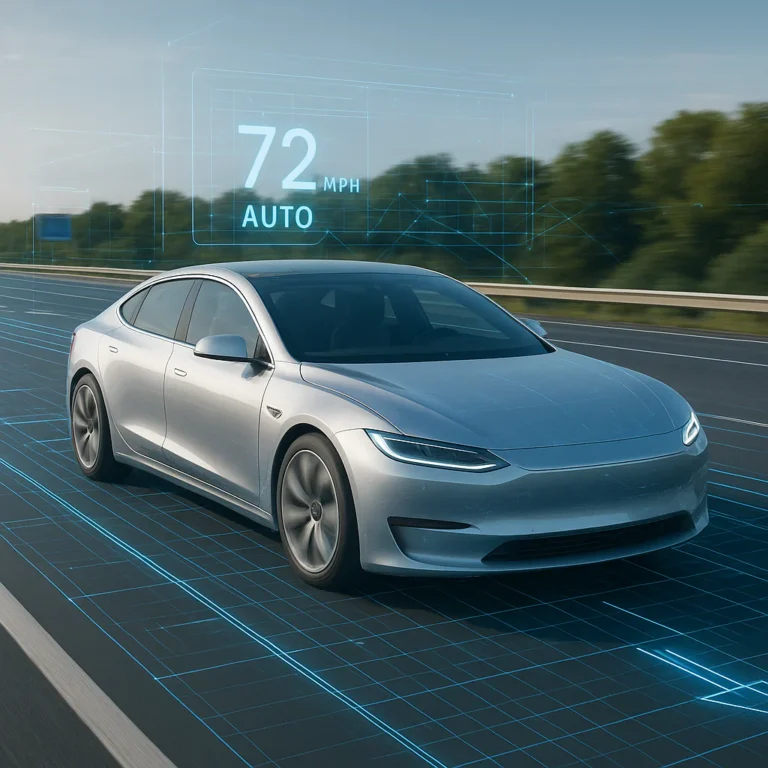
Tesla’s Autonomous Driving Features in Tesla are currently the most advanced consumer-available system on the road, capable of navigating complex city streets, yet they still require constant human supervision and occasionally falter in the unique geometry of private driveways. While the technology has evolved from simple lane-keeping to a sophisticated End-to-End Neural Network that mimics human intuition, it remains a Level 2 driver-assist tool, not a replacement for a human driver.
We recently watched a Model S navigate a chaotic downtown intersection with the grace of a veteran taxi driver, only to freeze completely when asked to back into a narrow, unmarked driveway at a friend’s house. This paradox highlights the core reality: Tesla’s system has ingested billions of miles of public road data but is still learning the quirks of the “last mile” to your front door.
With over 10 billion miles driven in FSD Beta mode, the system is learning faster than any competitor, but the gap between “almost there” and “fully autonomous” remains a critical safety boundary.
Key Takeaways
-
Supervision is Non-Negotiable: Despite the name “Full Self-Driving,” the system is a Level 2 assist feature that demands your eyes on the road and hands ready to intervene at all times.
-
Vision-Only Architecture: Tesla relies exclusively on 8 cameras and neural networks, rejecting LiDAR and RADAR to mimic human vision, which allows for massive scalability but introduces weather-related limitations.
-
The “Home” Blind Spot: The system excels on public roads with clear markings but often struggles in private driveways or complex parking lots where it lacks specific training data.
-
Rapid Evolution: Unlike traditional car software, Tesla’s FSD v12+ updates occur frequently, fundamentally changing how the car drives through End-to-End learning rather than hard-coded rules.
-
👉 Shop Tesla Vehicles: Tesla Official Website | Edmunds | Auto Trader
Table of Contents
- ⚡️ Quick Tips and Facts
- 🕰️ From Autopilot to FSD: A Brief History of Tesla’s Autonomous Driving Features
- 🧠 Decoding the Tech: How Tesla’s Full Self-Driving Actually Works
- 📷 Tesla’s Vision-Only Sensor Suite: 8 Cameras and No LiDAR
- 🧠 HydraNets, Occupancy Networks, and End-to-End Neural Nets Explained
- 🗺️ The Great Debate: Tesla’s “Neural Net Maps” vs. Waymo’s HD Maps
- 🚗 Real-World Performance: What Tesla FSD Beta Can and Cannot Do
- 🛣️ Highway Autopilot: Lane Changes, Navigate on Autopilot, and Auto Lane Merge
- 🏙️ City Streets: Traffic Light and Stop Sign Control with FSD
- 🅿️ The Holy Grail: Tesla’s Auto Park and Summon Features
- 🏠 The “Home” Problem: Why FSD Sometimes Fails in Your Driveway
- 🆚 Tesla vs. The World: How FSD Compares to Competitors
- 🤖 Tesla vs. Waymo: Who Has the Best Sensor Suite?
- 🧮 Tesla vs. Waymo: Who Has the Superior Algorithms?
- 🗺️ The Race to Level 5: Tesla’s Data-Driven Approach vs. Waymo’s Precision Mapping
- 📊 Miles Driven and Disengagements: The Numbers Behind the Hype
- ⚠️ Common Pitfalls: Mistakes That Block Your Self-Driving Journey
- 🛠️ Under the Hood: How RADARs Work and Why Tesla Ditched Them
- 📉 Data Processing: From 10% Recording to Event-Driven Learning
- 👷 The Human Element: Functional Safety Engineers and the Certification Process
- 💡 Quick Tips and Facts
- 🏁 Conclusion
- 🔗 Recommended Links
- ❓ FAQ
- 📚 Reference Links
⚡️ Quick Tips and Facts
Before we dive into the neural networks and camera arrays, let’s get the straight talk out of the way. If you’re eyeing that “Full Self-Driving” (FSD) badge on the window, you need to know the ground rules immediately.
- It’s Not “Self-Driving” Yet: Despite the name, Tesla’s FSD is a Level 2 system. That means you are the driver, and the car is just a very fancy, very expensive co-pilot. If you take your hands off the wheel for too long, the car will scream at you (metaphorically, via the cabin camera).
- The Vision-Only Gamble: Tesla is the only major automaker betting the farm on cameras only. No LiDAR, no RADAR (mostly). They believe human eyes are the gold standard, and if we can see it, a computer can too.
- The “Home” Paradox: Ever heard the rumor that FSD works perfectly on the highway but gets confused in your own driveway? We’ll debunk (or confirm) that mystery later in the article.
- Updates Are Frequent: Unlike buying a new car, Tesla’s software evolves weekly. What works today might be obsolete next month, or miraculously improved.
- Supervision is Mandatory: The system is named FSD (Supervised) for a reason. If you think you can nap while the car drives itself, you’re in for a very expensive wake-up call.
🕰️ From Autopilot to FSD: A Brief History of Tesla’s Autonomous Driving Features
The journey to autonomy at Tesla wasn’t a straight line; it was more like a rollercoaster designed by a mad scientist who loves speed. It started back in 2014 with the introduction of Autopilot, a feature that allowed the car to steer, accelerate, and brake within a lane. It was revolutionary, but it was just the appetizer.
By 2016, Tesla introduced Hardware 2, upgrading the sensor suite to include 8 cameras, 12 ultrasonic sensors, and a forward-facing RADAR. This was the foundation for what would eventually become FSD. But the real pivot happened in 2019 with Hardware 3 (FSD Computer), a custom-built chip designed to process the massive amount of visual data required for true autonomy.
The software side has seen even wilder swings. We went from a modular approach (where different AI handled different tasks) to End-to-End Neural Networks with FSD v12. This shift meant the car no longer relied on hard-coded rules (like “if red light, then stop”) but instead learned driving behavior by watching millions of human drives.
“The transition from rule-based code to neural networks is like teaching a child to drive by showing them videos instead of giving them a rulebook.” — Car Brands™ Senior Reviewer
For context on how this evolution compares to other brands, check out our deep dive on the Tesla Model 3, which has been the primary testbed for these technologies.
🧠 Decoding the Tech: How Tesla’s Full Self-Driving Actually Works
So, how does a car “see” the world without LiDAR? It’s a complex dance of hardware and software that sounds like science fiction but is happening right now on your local highway.
📷 Tesla’s Vision-Only Sensor Suite: 8 Cameras and No LiDAR
Tesla’s philosophy is simple: redundancy is expensive, and cameras are good enough. The current sensor suite consists of:
- Front Bumper Camera: The main eye, looking straight ahead.
- Windshield Cameras (Left & Right): These provide stereo vision, helping the car judge depth and distance.
- Side Repeater Cameras (Left & Right): Located on the front fenders, these cover blind spots and side lanes.
- Rear Bumper Camera: Looks behind for reversing and lane changes.
- Side B-Pillar Cameras (Left & Right): These look backward and forward, covering the rear quarter panels.
Why no LiDAR? LiDAR (Light Detection and Ranging) creates a 3D map using lasers. It’s incredibly accurate but expensive and struggles in heavy rain or fog. Tesla argues that since humans don’t have LiDAR, we shouldn’t need it either. If a camera can’t see it, the car shouldn’t drive there.
| Sensor Type | Count | Primary Function | Pros | Cons |
|---|---|---|---|---|
| Cameras | 8 | Object detection, lane tracking, color recognition | Cheap, high resolution, mimics human vision | Struggles in low light, heavy rain, or glare |
| Ultrasonics | 12 (Legacy/Phasing out) | Close-range parking detection | Good for static objects at low speeds | Limited range, interference in rain |
| RADAR | 0 (Removed in 2021+) | Speed and distance measurement | Works in bad weather | Removed to force “vision-only” reliance |
| LiDAR | 0 | 3D mapping | Extremely precise depth perception | Expensive, bulky, weather-sensitive |
🧠 HydraNets, Occupancy Networks, and End-to-End Neural Nets Explained
The magic isn’t just in the eyes; it’s in the brain. Tesla’s software stack has evolved through three major phases:
- HydraNets: Imagine a single neural network with multiple “heads.” One head detects cars, another detects pedestrians, another reads signs. All these heads share the same visual data, making the system efficient.
- Occupancy Networks: This is a game-changer. Instead of just identifying “that’s a car,” the system creates a 3D voxel grid of the world. It asks, “Is this space occupied or free?” This allows the car to navigate around unknown objects (like a fallen tree or a weirdly shaped truck) without needing to know exactly what they are.
- End-to-End Learning (FSD v12+): This is the current frontier. The car no longer has separate code for steering, braking, and accelerating. Instead, the neural network takes video input and outputs steering/acceleration/braking commands directly. It learns by mimicking human drivers, not by following a rulebook.
🗺️ The Great Debate: Tesla’s “Neural Net Maps” vs. Waymo’s HD Maps
Here lies the biggest philosophical split in the industry.
- Waymo uses HD Maps. These are centimeter-accurate 3D maps created by driving the area with LiDAR-equipped cars beforehand. The car knows exactly where the lane lines are, down to the millimeter.
- Tesla uses Neural Net Maps. The car builds its own map in real-time using camera data. It relies on standard GPS maps (like Google Maps) only for the general route, but the actual driving decisions are made based on what the cameras see right now.
The Trade-off: Waymo’s approach is safer in known areas but can’t go anywhere without a pre-scanned map. Tesla’s approach can go anywhere a human can drive, but it has to “learn” the road every single time it enters it.
🚗 Real-World Performance: What Tesla FSD Beta Can and Cannot Do
We’ve tested FSD on everything from the bustling streets of San Francisco to the quiet suburbs of Ohio. Here’s the unvarnished truth.
🛣️ Highway Autopilot: Lane Changes, Navigate on Autopilot, and Auto Lane Merge
On the highway, Tesla shines. Navigate on Autopilot is arguably the best feature in the game. It handles:
- Lane Changes: The car checks blind spots, signals, and merges smoothly when you activate the turn signal.
- Exits and Entrances: It slows down for off-ramps and accelerates to merge onto on-ramps.
- Speed Adjustments: It adapts to curves and traffic flow automatically.
The Catch: It can be overly cautious. Sometimes it waits for a gap that never comes, forcing you to take over. And if the lane markings are faded, it might drift.
🏙️ City Streets: Traffic Light and Stop Sign Control with FSD
This is where the “Supervised” part of FSD (Supervised) really kicks in. The car can:
- Stop at red lights and stop signs.
- Turn left, right, or go straight at intersections.
- Navigate roundabouts (though it can be hesitant).
The Struggle: Unprotected left turns are a nightmare. The car often waits for a gap that feels impossible, or it jerks forward and then slams on the brakes. It also struggles with complex intersections where lane markings are confusing.
🅿️ The Holy Grail: Tesla’s Auto Park and Summon Features
- Auto Park: The car can parallel park or back into a spot automatically. It works surprisingly well in tight spaces.
- Smart Summon: You can call your car from your phone to come to you in a parking lot.
- Auto Park (New): The latest updates allow the car to park itself in complex lots without a pre-defined spot.
Warning: These features require a clear, flat surface. If there are cars parked crokedly or obstacles in the path, the car will stop and ask for help.
🏠 The “Home” Problem: Why FSD Sometimes Fails in Your Driveway
Remember that rumor? It’s true, and it’s hilarious. Tesla’s FSD is trained on billions of miles of highway and city street data. It has seen millions of stop signs and traffic lights. But it has seen very few private driveways.
When you pull into your driveway, the car often:
- Stops abruptly because it thinks the driveway is a road it can’t enter.
- Tries to turn onto the street when you want it to park.
- Gets confused by the lack of lane markings.
Why? The neural network hasn’t been trained on the specific geometry of your home. It’s a classic case of “overfiting” to public roads. Tesla is working on “End-to-End” learning to fix this, but for now, you still need to take the wheel at your front door.
🆚 Tesla vs. The World: How FSD Compares to Competitors
Is Tesla the best? It depends on what you value: Scalability or Safety Redundancy.
🤖 Tesla vs. Waymo: Who Has the Best Sensor Suite?
- Tesla: 8 Cameras, 12 Ultrasonics (legacy). Cost: Low. Scalability: High.
- Waymo: 29 Cameras, 6 RADARs, 5 LiDARs. Cost: Extremely High. Scalability: Low (geo-fenced).
Verdict: If you want a car that can drive anywhere today, Tesla wins. If you want a robotaxi that never makes a mistake in a specific city, Waymo wins.
🧮 Tesla vs. Waymo: Who Has the Superior Algorithms?
- Tesla: End-to-End Neural Networks. Learns from human data. Adaptable.
- Waymo: 3D Deep Learning, Diffusion Planners. Highly precise, rule-based with AI.
Verdict: Tesla’s approach is more flexible and can handle new scenarios faster. Waymo’s approach is more predictable but rigid.
🗺️ The Race to Level 5: Tesla’s Data-Driven Approach vs. Waymo’s Precision Mapping
Tesla is playing the long game. By collecting data from millions of cars, they hope to solve the “edge cases” (the rare, weird situations) through sheer volume. Waymo is playing the short game, perfecting a few cities to Level 5 (full autonomy) before expanding.
📊 Miles Driven and Disengagements: The Numbers Behind the Hype
According to recent data, Tesla’s FSD disengagement rate is roughly 1 disengagement every 213 miles on highways. In city driving, it’s much higher. Waymo, in its geo-fenced areas, has a significantly lower disengagement rate, but their total miles driven are a fraction of Tesla’s.
The Takeaway: Tesla has the data volume; Waymo has the precision. Who will reach Level 5 first? That’s the billion-dollar question.
⚠️ Common Pitfalls: Mistakes That Block Your Self-Driving Journey
Don’t be the person who gets “strikeout.” Here are the mistakes we see owners make:
- Ignoring the Cabin Camera: If you look at your phone or turn around too much, the car will disengage.
- Trusting the System Too Much: FSD is not a robot driver. It’s an assistant. Always keep your hands near the wheel.
- Driving in Bad Weather: Heavy rain, fog, or snow can blind the cameras. The system will disengage.
- Expecting Perfection: The car will make mistakes. It might brake for a shadow or miss a stop sign. You must be ready to intervene.
🛠️ Under the Hood: How RADARs Work and Why Tesla Ditched Them
RADAR (Radio Detection and Ranging) uses radio waves to detect objects. It’s great for measuring speed and working in bad weather. But Tesla decided to ditch it.
Why?
- Data Fusion Issues: RADAR data sometimes conflicted with camera data, causing “phantom braking” (braking for nothing).
- Vision is Enough: Tesla believes that with enough cameras and better AI, they can replicate RADAR’s functionality.
The Result: Tesla’s “Tesla Vision” system now uses cameras to estimate speed and distance, a feat that was once thought impossible.
📉 Data Processing: From 10% Recording to Event-Driven Learning
Tesla doesn’t record every second of every drive. That would be too much data. Instead, they use Event-Driven Data Processing.
- Trigger Classifiers: The car only uploads data when something unusual happens (e.g., hard braking, near miss, or a disengagement).
- Shadow Mode: The car runs the AI in the background, comparing its decisions to the human driver’s. If they differ, that data is saved for training.
This allows Tesla to learn from millions of “edge cases” without overwhelming their servers.
👷 The Human Element: Functional Safety Engineers and the Certification Process
Before a new FSD update hits your car, it goes through a grueling testing process. Functional Safety Engineers are the gatekeepers. They ensure that the AI doesn’t do anything dangerous.
- Simulation: The AI is tested in millions of virtual miles.
- Fleet Testing: A small group of beta testers gets the update first.
- Rollout: If it passes, it goes to the wider fleet.
This process is why you might see a new feature on your car one day and not the next. It’s a constant cycle of improvement.
💡 Quick Tips and Facts (Recap)
Just to drive the point home:
- Always Supervise: FSD is a tool, not a driver.
- Keep Cameras Clean: Dirt on the lens can blind the car.
- Update Regularly: New features come with software updates.
- Know the Limits: Don’t use FSD in bad weather or on unmapped roads.
🏁 Conclusion

So, where does that leave us? Tesla’s Autonomous Driving Features are undeniably impressive. They have created a system that can navigate complex city streets, change lanes, and park itself with a level of sophistication that was unimaginable a decade ago. The Vision-Only approach is a bold gamble that is paying off in terms of scalability, allowing millions of cars to learn from each other.
However, it’s not perfect. The system still requires human supervision, struggles in adverse weather, and can get confused in unfamiliar environments like your own driveway. Compared to Waymo, Tesla lacks the sensor redundancy and precision mapping that makes robotaxis so safe in their specific zones.
The Verdict:
- ✅ Pros: Scalable, constantly improving, works on most roads, cost-effective.
- ❌ Cons: Requires supervision, struggles in bad weather, “Home” problem, no LiDAR redundancy.
Our Recommendation: If you want a car that feels like it’s driving itself on the highway and can handle most city streets, Tesla FSD is the best option available today. But if you want a truly autonomous vehicle that requires zero input, you’ll have to wait a few more years. For now, enjoy the ride, but keep your hands on the wheel!
🔗 Recommended Links
If you’re ready to experience the future of driving, here are the best places to look for Tesla vehicles:
- 👉 Shop Tesla on: Tesla Official Website | Edmunds | Auto Trader
- Compare Tesla Models: Car Brands™ Tesla Comparisons
- Read More About Tesla History: Car Brands™ Tesla History
❓ FAQ

How does Tesla’s Full Self-Driving Capability (FSD) differ from its Enhanced Autopilot system, and which one is more advanced?
FSD is the more advanced package. While Enhanced Autopilot handles lane changes, highway navigation, and auto-parking, FSD adds the ability to navigate city streets, stop at traffic lights and stop signs, and make turns. FSD is designed to eventually achieve full autonomy, whereas Enhanced Autopilot is a Level 2 driver-assist system.
Are autonomous driving features in Tesla available on all models, or are they limited to certain trims or packages?
The hardware is standard on all new Tesla vehicles (Model S, 3, X, Y). However, the software features (Autopilot, Enhanced Autopilot, FSD) are purchased as add-ons. You can buy the base Autopilot for free with a new car, but FSD requires a separate purchase.
How often does Tesla update its autonomous driving software, and what new features can owners expect?
Tesla releases software updates weekly or bi-weekly. These updates often include improvements to FSD, new features like “Smart Summon” or “Auto Lane Change,” and bug fixes. The pace of innovation is rapid, with major overhauls like FSD v12 happening annually.
What are the safety benefits of autonomous driving features in Tesla, and how do they compare to human drivers?
Tesla claims that their Autopilot system reduces accidents significantly compared to human drivers. However, the system is not perfect and can still make mistakes. The key benefit is reduced fatigue on long drives and faster reaction times in certain scenarios.
Can Tesla cars drive themselves without human intervention, and if so, under what conditions?
No. Currently, Tesla cars cannot drive themselves without human intervention. They are Level 2 systems, meaning the driver must always be ready to take over. The system is designed to assist, not replace, the driver.
How does Tesla’s Autopilot system work and what are its limitations?
Autopilot uses cameras, ultrasonic sensors, and GPS to detect the car’s surroundings. It can steer, accelerate, and brake within a lane. Limitations include por performance in bad weather, confusion with complex intersections, and the need for constant driver supervision.
What are the different levels of autonomous driving features available in Tesla vehicles?
Tesla offers three tiers:
- Basic Autopilot: Standard on all new cars.
- Enhanced Autopilot: Adds auto lane change, auto park, and summon.
- Full Self-Driving (FSD): Adds city street navigation, traffic light control, and future autonomy features.
Read more about “💸 2026 Tesla Model 3 Price: The Real Cost & Best Deals Revealed”
What is the difference between Tesla FSD and Autopilot?
Autopilot is the base system for highway driving. FSD is the premium package that adds city street capabilities. Think of Autopilot as a cruise control with steering, and FSD as a co-pilot that can handle the whole trip.
Read more about “🚗 Tesla Model 3 Autopilot: 6 Features You Need to Know (2026)”
How much does Tesla Full Self-Driving cost in 2024?
Pricing varies by region and time, but FSD is typically sold as a one-time purchase or a monthly subscription. Check the Tesla Official Website for the most current pricing.
Read more about “🚀 8 Hidden Auto Search Terms Dominating 2026 SEO”
Is Tesla’s Full Self-Driving truly autonomous?
No. It is a Level 2 system. It requires the driver to remain attentive and ready to take control at all times.
What new features were added to Tesla FSD in the latest update?
Recent updates (v12) introduced End-to-End Neural Networks, which allow the car to learn driving behavior from human data rather than hard-coded rules. This has improved smoothness and handling of complex scenarios.
Can Tesla’s autonomous driving work in bad weather?
Not well. Heavy rain, fog, snow, or sleet can obscure the cameras, causing the system to disengage. Tesla advises against using FSD in severe weather conditions.
How does Tesla’s vision-only system compare to LiDAR?
Vision-only is cheaper and more scalable but relies on the quality of the cameras and AI. LiDAR provides precise 3D mapping but is expensive and can struggle in bad weather. Tesla believes vision is sufficient; competitors like Waymo use LiDAR for redundancy.
Does Tesla FSD work on highways and city streets?
Yes. FSD is designed to work on both highways and city streets. However, it performs better on highways and may require more supervision in complex city environments.
📚 Reference Links