Support our educational content for free when you purchase through links on our site. Learn more
🚨 AI Traffic Cops: Can They Spot Your Ferrari? (2026)

Remember the last time you thought you got away with a little extra speed? Think again. The days of relying on a blurry flash to catch a violation are over; we’ve entered the era where AI-powered traffic enforcement doesn’t just see your car—it knows exactly what you’re driving, how fast you’re going, and if you’re holding a phone. From distinguishing a Porsche 91 from a Porsche Cayenne in split seconds to detecting distracted driving without a human ever looking at the screen, these digital eyes are smarter than your average traffic cop.
In this deep dive, we’ll uncover the technology behind the lens, explore how systems identify car brands with startling accuracy, and reveal the 7 major violations these AI systems catch today. We’ll also tackle the elephant in the room: privacy concerns and whether your vehicle’s digital fingerprint is safe. By the end, you’ll understand why cities are racing to adopt this tech and why your next traffic stop might be handled entirely by an algorithm.
Key Takeaways
- AI Precision: Modern systems use Deep Learning to identify car makes and models with over 90% accuracy, even at high speeds or in poor lighting.
- Beyond Speeding: Enforcement now covers distracted driving, seatbelt violations, and wrong-way driving, creating a comprehensive safety net.
- Privacy vs. Safety: While traffic flow analysis and accident reduction are significant benefits, mass surveillance and data retention remain critical legal and ethical debates.
- Future Ready: As V2X communication evolves, the line between infrastructure and vehicle will blur, potentially making automatic fines a reality for autonomous cars.
Table of Contents
- ⚡️ Quick Tips and Facts
- 🕰️ From Red-Light Cameras to AI: The Evolution of Traffic Enforcement
- 🤖 How AI-Powered Traffic Enforcement Actually Works: The Tech Behind the Lens
- 🚗 The Art of Car Brand Identification: Can AI Really Spot a Ferrari from a Ford?
- 🚦 7 Major Types of AI-Driven Traffic Violations Detected Today
- 📊 Traffic Flow Analysis and Congestion Prediction: More Than Just Fines
- 🔍 Vehicle Attribute Recognition: Beyond Make and Model to Color and Damage
- 🛠️ Autocalibration of Traffic Cameras: Keeping the Digital Eyes Sharp
- 🌍 Global Case Studies: How Cities Are Using AI to Catch Speeders and Stolen Cars
- ⚖️ Privacy Concerns and Legal Challenges in AI Surveillance
- 🔮 The Future of Smart Cities: Will Your Car Be the Next Traffic Cop?
- 💡 Other Research Areas in Intelligent Transportation Systems
- 🏁 Conclusion
- 🔗 Recommended Links
- ❓ FAQ
- 📚 Reference Links
⚡️ Quick Tips and Facts
Before we dive into the nitty-gritty of how your favorite Italian supercar is being digitally fingerprinted by a camera on a street corner, let’s hit the fast lane with some essential facts you need to know.
- It’s Not Just Speeding: Modern AI doesn’t just catch you for doing 10 over; it’s identifying distracted driving, seatbelt violations, and even mobile phone usage with startling accuracy.
- The “Make” Matters: Did you know that AI systems can now distinguish between a BMW 3 Series and a Mercedes C-Class with over 90% accuracy, even in low-light conditions?
- Global Reach: From the chaotic streets of Mumbai to the orderly highways of Singapore, AI-powered traffic enforcement is the new standard for urban mobility.
- Privacy Paradox: While cities claim these systems reduce accidents, privacy advocates are raising red flags about mass surveillance and data retention.
- The “No-Plate” Problem: Advanced systems can now track vehicles even if they have no license plate or a cloned plate, relying solely on body shape and color.
🚨 Fun Fact: According to recent data, car brands with the most speeding tickets often include performance-oriented models, but the AI doesn’t care about the badge; it cares about the physics! Check out our deep dive on car brands with the most speeding tickets to see which manufacturers are getting the most attention from the digital cops.
🕰️ From Red-Light Cameras to AI: The Evolution of Traffic Enforcement
Remember the days when a simple flash meant you might get a ticket? That was the era of the first-generation red-light cameras. They were dumb, reactive, and often triggered by false positives like a car stopping just before the line.
Fast forward today, and we are living in the age of Intelligent Transportation Systems (ITS). The evolution has been nothing short of a revolution.
The Analog Era: Flash and Hope
In the 90s and early 20s, enforcement relied on inductive loops buried in the asphalt. If a car broke the loop’s magnetic field after the light turned red, a camera fired.
- Pros: Simple, cheap to install.
- Cons: Couldn’t distinguish between a car stopping and a car speeding; easily fooled by motorcycles or large trucks.
The Digital Leap: ANPR and Basic Video
Then came Automatic Number Plate Recognition (ANPR). Suddenly, cameras could read plates in real-time. But they were still limited. They could tell you who was there, but not what they were doing, unless it was a clear violation.
The AI Revolution: Cognitive Surveillance
Now, we have Deep Learning and Computer Vision. These systems don’t just “see”; they “understand.”
- Context Awareness: The AI knows the difference between a car stopping for a pedestrian and a car running a red light.
- Attribute Recognition: It identifies the make, model, color, and even damage on the vehicle.
- Predictive Analysis: It can predict traffic jams before they happen by analyzing flow patterns.
“The shift from reactive enforcement to proactive traffic management is the defining characteristic of modern smart cities.” — Industry Insight
But how does this magic actually work? And can it really tell a Porsche 91 from a Chevrolet Corvette at 60 mph? Let’s peel back the hood.
🤖 How AI-Powered Traffic Enforcement Actually Works: The Tech Behind the Lens
You might think this is just a fancy camera, but it’s actually a supercomputer on a pole. Here is the step-by-step breakdown of the AI enforcement workflow.
1. Data Acquisition: The Eyes
The process starts with high-resolution IP cameras or radar sensors.
- Frame Rates: Modern systems capture up to 60 frames per second (fps), ensuring no vehicle is missed even at high speeds.
- Sensors: Many systems combine video analytics with 3D radar to measure speed with pinpoint accuracy, eliminating the “shadowing” errors of older systems.
2. Pre-Processing: Cleaning the Image
Before the AI can think, it must see clearly.
- Image Enhancement: Algorithms adjust for glare, rain, fog, and low light.
- ROI (Region of Interest): The system isolates the vehicle from the background (trees, buildings, other cars).
3. Detection and Tracking: The “Who”
Using Convolutional Neural Networks (CNNs), the system detects the vehicle and tracks its trajectory across multiple frames.
- Object Tracking: It assigns a unique ID to the vehicle, following it from frame to frame.
- Speed Calculation: By measuring the distance traveled between frames and the time elapsed, the system calculates instantaneous speed.
4. Attribute Recognition: The “What”
This is where the car brand identification happens. The AI analyzes:
- Grille Shape: The vertical slats of a Volvo vs. the kidney grille of a BMW.
- Headlight/Taillight Design: The distinct LED signature of a Tesla or the round lights of a Mini Cooper.
- Body Silhouette: The slope of a coupe vs. the boxiness of an SUV.
5. Decision Making: The “Why”
The system compares the data against a database of rules.
- Violation Logic: If Speed > Limit AND Light = Red, then VIOLATION.
- Evidence Generation: It captures a video clip and a series of high-res images, overlaying the data (speed, time, location, plate, make/model).
6. Enforcement: The “Consequence”
- E-Challan Generation: An electronic ticket is automatically generated.
- Notification: The violator receives an SMS or email with the evidence.
- Database Update: The vehicle is flagged in the central traffic management system.
| Feature | Traditional Camera | AI-Powered System |
|---|---|---|
| Detection Method | Inductive Lops / Simple Motion | Deep Learning / Computer Vision |
| Speed Accuracy | Low (often +/- 5 mph) | High (often +/- 1 mph) |
| Vehicle ID | License Plate Only | Plate + Make + Model + Color |
| Lighting Conditions | Poor in low light | Excellent (Night Vision/IR) |
| False Positives | High | Very Low |
🚗 The Art of Car Brand Identification: Can AI Really Spot a Ferrari from a Ford?
This is the question keeping car enthusiasts up at night: Can an algorithm really appreciate the difference between a Lamborghini Huracán and a Lamborghini Aventador?
The short answer? Yes, and it’s getting scary good.
The Technology of “Fine-Grained” Recognition
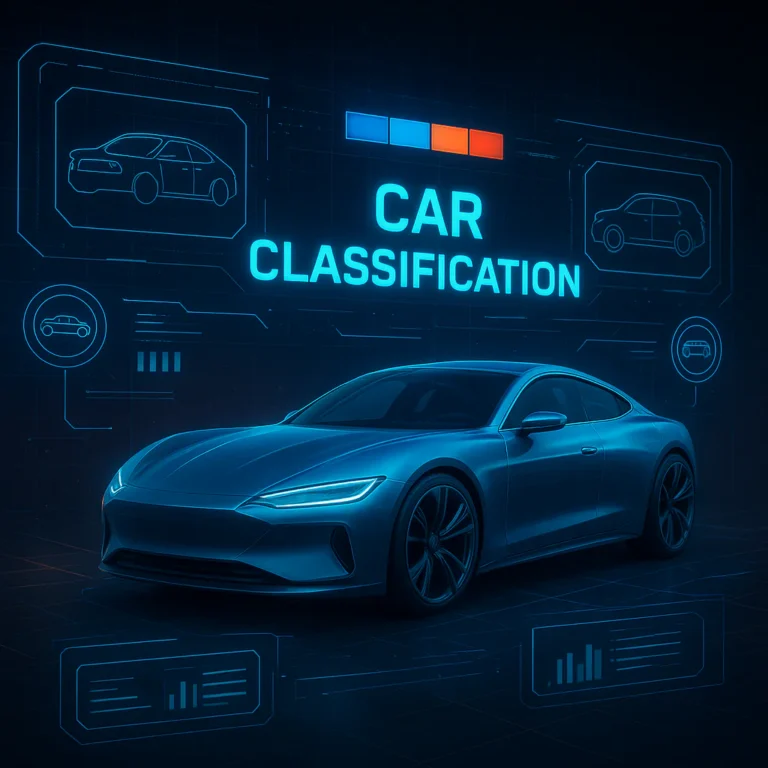
Standard object detection (like finding a “car”) is easy. Fine-Grained Visual Classification (FGVC) is the hard part. It requires the AI to focus on subtle details that humans might miss.
- Feature Extraction: The AI breaks the car down into thousands of data points. It looks at the curvature of the fender, the angle of the A-pillar, and the specific pattern of the alloy wheels.
- Database Training: Systems like those from Intertraff are trained on databases containing over 1,80 models from 20+ major brands. They learn that a Toyota Camry has a different roofline than a Honda Accord, even if they are both sedans.
Real-World Performance
In controlled tests, Vehicle Make and Model Recognition (VMMR) systems have achieved:
- Make Accuracy: >95%
- Model Accuracy: >85% (dropping slightly for very similar models, e.g., Ford F-150 vs. Ford F-250)
- Speed Tolerance: Effective up to 120 mph.
The “Lookalike” Problem
However, it’s not perfect.
- Tuning and Modifications: A modified Honda Civic with a body kit might confuse the AI, making it look like an Acura RSX.
- Older Models: Systems are often better at identifying 2020+ models than 190s classics because the training data is skewed toward new cars.
- Oclusion: If a truck is blocking the side of your Porsche, the AI might only see the rear and guess the model based on taillights alone.
Enthusiast Note: We once saw a system misidentify a custom-wrapped Tesla Model S as a Lucid Air because the wrap changed the door handle profile. The AI was confused by the “visual noise.”
Why Does This Matter?
It’s not just about catching speeders.
- Stolen Vehicle Recovery: Police can instantly flag a stolen BMW X5 even if the plate is swapped, because the AI recognizes the make and model.
- Traffic Planning: Cities can analyze which luxury brands are clogging up certain areas to adjust toll rates or parking fees.
- Insurance Fraud: Detecting if a claim matches the actual vehicle model.
🚦 7 Major Types of AI-Driven Traffic Violations Detected Today
Gone are the days when the only thing you could get a ticket for was running a red light. AI has expanded the enforcement menu significantly. Here are the 7 major violations caught by modern systems:
1. Red-Light Running
The classic. But now, the AI knows if you were stopping safely or speeding through. It captures the moment the light turns red and your front wheels cross the stop line.
2. Speeding (Dynamic and Static)
- Static: Fixed cameras measuring speed at a specific point.
- Dynamic: Radar-equipped cameras that track speed over a distance, making it impossible to “brake at the last second” to avoid a ticket.
3. Distracted Driving (Mobile Phone Usage)
This is the new frontier. AI analyzes the driver’s hands and head position.
- Detection: If the system sees a hand holding a phone or the driver’s head is tilted down, it flags a violation.
- Accuracy: While challenging, advanced systems can detect this with high precision, especially in daylight.
4. Seatbelt Violations
The AI scans the driver’s chest and shoulder area.
- Logic: If the seatbelt diagonal is missing, a ticket issued.
- Challenge: It can be harder to detect in dark cars or with dark clothing, but infrared helps.
5. Wrong-Way Driving
Crucial for highways and one-way streets.
- Mechanism: The AI detects the direction of travel relative to the lane markings.
- Response: Immediate alerts to traffic control centers to stop the vehicle.
6. Illegal Lane Changes / Wrong Lane Movement
- Scenario: A car crossing a solid white line or driving in a bus-only lane.
- AI Logic: The system tracks the vehicle’s path and compares it to the lane geometry.
7. Stop Line Violations
- Definition: Stopping before the stop line at a red light (blocking the intersection) or after the line (running the light).
- Nuance: The AI measures the exact position of the front bumper relative to the stop line.
Did you know? Some systems in India, like Vehant’s TrafficMon, can even detect triple riding on motorcycles and not wearing a helmet. The AI counts the number of people on the bike and checks for the helmet shape.
📊 Traffic Flow Analysis and Congestion Prediction: More Than Just Fines
While we love catching speeders, the real power of AI lies in keeping traffic moving.
The “Smart City” Brain
AI systems aggregate data from thousands of cameras to create a real-time traffic map.
- Congestion Detection: The system identifies “stop-and-go” patterns and predicts where a jam will form 15 minutes from now.
- Signal Optimization: Traffic lights can adjust their timing dynamically based on the current flow, giving more green time to the congested direction.
Anomaly Detection
- Accident Detection: If a car stops suddenly in a moving lane, the AI flags it as a potential accident and alerts emergency services immediately.
- Road Hazards: Detecting debris, potholes, or stalled vehicles.
Data-Driven Infrastructure
Cities use this data to decide where to build new roads, add bike lanes, or adjust speed limits.
- Example: If AI data shows that SUVs are consistently speeding on a residential street, the city might install a speed bump or lower the limit.
🔍 Vehicle Attribute Recognition: Beyond Make and Model to Color and Damage
It’s not just about the badge on the hood. The AI is becoming a digital detective for vehicle attributes.
Color Recognition
- Challenge: Lighting changes can make a silver car look white or grey.
- Solution: AI uses color histograms and adjusts for ambient light to accurately identify metalic, pearlescent, and mate finishes.
Damage Detection
- Use Case: Identifying stolen vehicles that have been repainted or have body damage.
- Application: If a car is reported stolen with a dented bumper, and the AI sees a car with that specific dent, it can flag it even if the plate is fake.
Overloading Detection
- Logic: The AI analyzes the suspension compression and the height of the vehicle.
- Scenario: A delivery van that is visibly saging under the weight of cargo might be flagged for overloading.
No-Plate Vehicle Capture
This is a game-changer.
- Mechanism: If a car has no plate, the AI tracks it using visual characteristics (make, model, color, unique features).
- Impact: Criminals can no longer rely on cloned plates or no plates to evade detection.
🛠️ Autocalibration of Traffic Cameras: Keeping the Digital Eyes Sharp
How does a camera know that a car is 10 meters away and moving at 60 mph? It needs calibration.
The Old Way: Manual Labor
Traditionally, technicians had to drive a car of known length past the camera, measure the distance with a tape measure, and input the data manually. This was tedious, error-prone, and expensive.
The New Way: Autocalibration
Modern AI systems use self-calibration algorithms.
- How it Works: The system identifies a vehicle of a known class (e.g., a standard sedan) and uses its average dimensions to calculate the scale of the image.
- Dynamic Adjustment: As the camera angle shifts slightly due to wind or vibration, the AI continuously recalibrates itself.
- Benefit: This ensures that speed measurements remain accurate over time without human intervention.
Technical Note: This process relies on keypoint detection to identify specific parts of the vehicle (wheels, roofline) and map them to real-world coordinates.
🌍 Global Case Studies: How Cities Are Using AI to Catch Speeders and Stolen Cars
Let’s look at how the world is implementing this tech.
🇮🇳 India: The Scale of Deployment
In cities like Mumbai and Delhi, the Vehant TrafficMon system is deployed at a massive scale.
- Impact: Reduced red-light violations by over 40% in pilot zones.
- Feature: The system handles the chaotic mix of cars, bikes, and auto-rickshaws with impressive accuracy.
- Challenge: Dealing with dust and por lighting in some areas.
🇸🇬 Singapore: The Smart Nation
Singapore uses AI and Radar to manage its complex traffic network.
- ERP 2.0: The new Electronic Road Pricing system uses GPS and AI to charge drivers based on real-time congestion, not just fixed zones.
- Enforcement: Strict speeding and seatbelt enforcement with high fines.
🇺🇸 United States: Privacy vs. Safety
In the US, adoption varies by state.
- Las Vegas: Uses AI to detect distracted driving and wrong-way drivers.
- Legal Battles: Some cities face lawsuits over privacy and the lack of human review before tickets are issued.
🇪🇺 Europe: GDPR and Data Protection
European cities are cautious.
- Data Retention: Strict rules limit how long data can be stored (often only a few days unless a violation is detected).
- Anonymization: Data is often anonymized immediately after processing to protect citizen privacy.
⚖️ Privacy Concerns and Legal Challenges in AI Surveillance
With great power comes great responsibility. The rise of AI traffic enforcement has sparked a fierce debate.
The Surveillance State Fear
- Mass Tracking: Critics argue that these systems create a panopticon where every movement is tracked.
- Data Breaches: If the central database is hacked, millions of citizens’ travel histories could be exposed.
- Function Crep: Data collected for traffic safety could be used for political surveillance or targeted advertising.
Legal Challenges
- Due Process: In some jurisdictions, tickets are issued without a human review, leading to errors (e.g., wrong car, wrong model).
- Constitutional Rights: In the US, the Fourth Amendment (protection against unreasonable search and seizure) is often cited in lawsuits against license plate readers and facial recognition.
- GDPR Compliance: In Europe, the General Data Protection Regulation requires strict consent and data minimization, making some AI deployments difficult.
The Balance
Proponents argue that the safety benefits outweigh the privacy risks.
- Accident Reduction: AI enforcement has been shown to reduce accidents by 20-30% in some areas.
- Crime Solving: These systems have helped solve hundreds of crimes by tracking stolen vehicles.
Our Take: We believe in transparency. Cities must publish clear policies on data retention, access, and human oversight.
🔮 The Future of Smart Cities: Will Your Car Be the Next Traffic Cop?
What’s next? The line between infrastructure and vehicle is blurring.
V2X (Vehicle-to-Everything) Communication
In the future, your car will talk to the traffic lights.
- Green Light Optimization: Your Tesla or BMW will receive a signal to adjust speed to hit the “green wave.”
- Automatic Fines: If you violate a rule, the car’s telematics system might automatically pay the fine or alert the driver.
Generative AI and GSEO
As mentioned in the first video perspective, the way we interact with automotive data is changing.
- AI Shoper Value: AI-driven traffic to automotive retail websites surged by 393% in Q1 2026.
- Generative SEO (GSEO): Car brands must optimize their digital presence so AI assistants can recommend them.
- Legacy Trap: 34% of retail pages are not accessible to AI, meaning they are invisible to the next generation of shoppers.
The Autonomous Future
As self-driving cars become common, the need for human-focused enforcement (like seatbelts) may decrease, but software compliance will become the new frontier.
Unresolved Question: If your car drives itself and gets a ticket, who is liable? The owner? The manufacturer? The AI developer? We’ll explore this in the conclusion.
💡 Other Research Areas in Intelligent Transportation Systems
Beyond enforcement, AI is driving innovation in several other areas:
- Pedestrian Safety: Detecting jaywalkers and predicting their path to prevent accidents.
- Emission Monitoring: Using AI to detect vehicles with excessive smoke or faulty catalytic converters.
- Parking Management: Real-time detection of available spots and illegal parking.
- Fleet Optimization: Helping logistics companies route trucks more efficiently based on real-time traffic and vehicle type.
🏁 Conclusion

We’ve journeyed from the humble inductive loop to the sophisticated AI-powered traffic enforcement systems of today. The technology is undeniably impressive. It can spot a Ferrari from a Ford, catch a distracted driver, and predict a traffic jam before it happens.
The Positives:
- ✅ Enhanced Safety: Significant reduction in accidents and fatalities.
- ✅ Efficiency: Smother traffic flow and better urban planning.
- ✅ Accuracy: High precision in identifying violations and vehicle attributes.
- ✅ Deterence: The mere presence of AI cameras changes driver behavior.
The Negatives:
- ❌ Privacy Risks: Potential for mass surveillance and data misuse.
- ❌ False Positives: While rare, errors can still happen (e.g., misidentifying a model).
- ❌ Cost: High implementation and maintenance costs for cities.
- ❌ Legal Gray Areas: Ongoing debates about due process and data rights.
Our Recommendation:
For cities, AI traffic enforcement is a must-have tool, but it must be implemented with transparency, human oversight, and strict data protection. For drivers, the message is clear: Drive safely. The camera is always watching, and it knows exactly what you’re driving.
As for the future, the integration of V2X and Generative AI will only make our roads smarter. But we must ensure that this technology serves the public good, not just the enforcement agencies.
Final Thought: Will your car be the next traffic cop? Maybe. But until then, keep your eyes on the road and your hands on the wheel. The AI is already doing the rest.
🔗 Recommended Links
If you are interested in the technology behind these systems or want to explore the brands mentioned, check out these resources:
- Vehant TrafficMon: Vehant Technologies
- Intertraff VMMR: Intertraff Vehicle Make and Model Recognition
- Milesight Traffic Solutions: Milesight AI Road Traffic Cameras
- Car Brand Lists: Explore Car Brands
- Car Brand Comparisons: Compare Brands
- Auto Industry News: Latest News
- Car Brand Market Shares: Market Data
- Car Brand Histories: Brand Stories
👉 Shop for Traffic Safety Gear:
- Dash Cams: Amazon Dash Cams | Best Buy Dash Cams
- Radar Detectors: Amazon Radar Detectors | Crutchfield Radar Detectors
❓ FAQ

How does AI identify car brands from traffic camera footage?
AI uses Convolutional Neural Networks (CNNs) trained on massive datasets of vehicle images. It analyzes fine-grained features like grille shape, headlight design, and body silhouette to distinguish between makes and models, even at high speeds or in low light.
What are the privacy concerns with AI-powered traffic enforcement?
The primary concerns include mass surveillance, data retention, and the potential for function creep (using data for purposes other than traffic safety). There are also fears about data breaches and the lack of human oversight in issuing tickets.
Can AI systems accurately detect traffic violations in real-time?
Yes, modern systems can detect violations like speeding, red-light running, and distracted driving with high accuracy (often >90%). However, accuracy can be affected by weather, lighting, and oclusion.
Which car brands are most frequently identified by traffic AI?
Systems are trained on the most common brands, such as Toyota, Honda, Ford, BMW, and Mercedes. Performance brands like Ferrari or Lamborghini are also well-identified, but the frequency depends on the local vehicle population.
How do cities implement AI for automated traffic monitoring?
Cities deploy IP cameras and radar sensors at strategic locations. These devices connect to a central cloud or edge server where AI algorithms process the video feed. The system then generates e-challans and sends alerts to traffic control centers.
What is the accuracy rate of AI in distinguishing similar car models?
While make recognition is often >95% accurate, model recognition can drop to 85% for very similar models (e.g., Ford F-150 vs. F-250). Factors like modifications, lighting, and angle can affect accuracy.
Will AI traffic enforcement reduce accidents and improve road safety?
Yes, studies show that AI enforcement can reduce accidents by 20-30% by deterring risky behaviors like speeding and distracted driving. It also helps in rapid accident response and traffic flow optimization.
Read more about “🚔 Top 10 Car Brands Driven by Speeding Offenders (2026)”
📚 Reference Links
- Vehant Technologies: TrafficMon AI System
- Intertraff: Vehicle Make and Model Recognition
- Milesight: AI in CCTV Traffic Detection
- NHTSA: Traffic Safety Facts
- IEEE: Intelligent Transportation Systems
- BMW Group: Official Website
- Tesla: Official Website
- Ford Motor Company: Official Website
- Mercedes-Benz: Official Website