Support our educational content for free when you purchase through links on our site. Learn more
🚀 Luxury Car Market Trends & Forecasts (2026): 10 Brands to Watch

The luxury car market is rapidly pivoting from combustion engines to electric dominance, with SUVs and AI-driven autonomy redefining what “premium” means for 2026 and beyond. When you ask What are the market trends and forecasts for luxury car brands?, the answer is clear: the future belongs to those who master software, sustainability, and the electric SUV.
We once watched a Rolls-Royce owner at a car show lament that his V12 engine sounded like “a dying dragon,” only to be silenced by the electric hum of a new Lucid Air that accelerated faster than a Formula 1 car. That moment perfectly captures the industry’s seismic shift. The days of judging luxury solely by engine displacement are over; now, it’s about range, code, and the seamless integration of your digital life.
With the Asia-Pacific region projected to outpace all others in growth and the EV segment expected to skyrocket, the landscape is changing faster than a supercar on a drag strip. Whether you are a seasoned enthusiast or a first-time luxury buyer, understanding these dynamics is crucial to making the right investment.
Key Takeaways
- The SUV Supremacy: SUVs and crossovers now command over 50% of the global luxury market, driven by a demand for versatility and a higher driving position.
- Electric is Non-Negotiable: By 2030, the EV segment will be the fastest-growing area, with legacy giants like Mercedes-Benz and BMW aggressively pivoting to electrification.
- Tech as the New Status Symbol: Autonomous driving and AI integration are replacing horsepower as the primary differentiators for premium buyers.
- Regional Shifts: While Europe and North America remain strong, the Asia-Pacific region is the undisputed growth engine, fueled by China’s tech-savy luxury consumers.
- Reliability Over Hype: Modern buyers are increasingly acting like “CFOs,” prioritizing long-term value and resale value over fleeting technological gimmicks.
👉 Shop Top Luxury Brands:
- Electric Luxury: Tesla | Lucid Motors | Mercedes-Benz EQ
- Performance Luxury: BMW M | Porsche | Audi Sport
- Ultra-Luxury: Rolls-Royce | Bentley | Lexus
Table of Contents
- ⚡️ Quick Tips and Facts
- 📜 The Evolution of Opulence: A Brief History of Luxury Car Brands
- 📈 Global Luxury Car Market Trends: What’s Driving the Surge?
- 🔮 Future Forecasts: Where the Industry is Headed by 2030
- 🚗 Top Contenders: The Leading Luxury Car Brands Shaping the Market
- 1. Tesla’s Disruption of the Premium EV Segment
- 2. Mercedes-Benz and the S-Class Benchmark
- 3. BMW’s M Division and Performance Luxury
- 4. Audi’s Tech-Forward Approach to High-End Driving
- 5. Porsche’s Unwavering Commitment to Sportiness
- 6. Rolls-Royce and Bentley: The Pinnacle of Ultra-Luxury
- 7. Lucid Motors and the New Wave of American Luxury
- 8. Cadillac’s Renaissance in the US Market
- 9. Lexus: Reliability Mets Refined Comfort
- 10. Genesis: The Challenger Redefining Value
- 🔋 The Electric Revolution: How EVs are Reshaping Luxury
- 🤖 Autonomous Driving and AI: The New Status Symbols
- 🌍 Regional Market Dynamics: North America, Europe, and Asia
- 💰 Pricing Strategies and Consumer Spending Habits
- 🛡️ Supply Chain Challenges and Semiconductor Shortages
- 🧐 How to Choose the Right Luxury Brand for Your Lifestyle
- 🏁 Conclusion
- 🔗 Recommended Links
- ❓ FAQ
- 📚 Reference Links
⚡️ Quick Tips and Facts
Before we dive into the deep end of the luxury automotive ocean, let’s hit the highlights. If you’re thinking about dropping a significant chunk of change on a badge that whispers (or shouts) “success,” here’s what you need to know right now:
- The SUV Takeover: Forget the sleek sedan for a moment. SUVs and crossovers now command over 50% of the global luxury market, with some regions like China seeing that number hit 64%. Why? Because modern life demands versatility, and a high driving position feels safer in crowded cities.
- The Electric Shift: The era of the V12 is winding down, not with a bang, but with a silent hum. Major players like Mercedes-Benz and BMW are pouring billions into electrification, with the EV segment projected to be the fastest-growing area by 2030.
- The Price of Prestige: The average new luxury car now costs significantly more than the average household income can comfortably handle without stretching loan terms to 7-8 years. As one industry observer noted, “If a car needs nearly 10 months of installments to sell, is it still a luxury product?”
- Regional Powerhouses: While Europe and North America remain strongholds, the Asia-Pacific region is the undisputed growth engine, driven by China’s insatiable appetite for high-tech, electric luxury.
- Reliability vs. Hype: A growing number of buyers are acting like “CFOs of their families,” prioritizing long-term reliability and resale value over the flashiest new tech gimmicks.
For a deeper dive into the numbers behind these brands, check out our comprehensive breakdown of Car Brand Statistics.
📜 The Evolution of Opulence: A Brief History of Luxury Car Brands

Luxury cars didn’t start with touchscreens and autonomous driving. They began with steam, leather, and a distinct lack of suspension. The story of the luxury car is a tale of engineering excess meeting social aspiration.
In the late 19th and early 20th centuries, brands like Rolls-Royce, Bentley, and Mercedes-Benz (then Daimler-Motoren-Gesellschaft) were building “horseless cariages” for the aristocracy. The definition of luxury was simple: smoothness, quietness, and exclusivity. If your car didn’t shake your teeth out, it was a luxury car.
Fast forward to the post-war era, and the definition shifted. The American muscle era introduced the idea that luxury could be loud. Cadillac and Lincoln became symbols of the American Dream, offering massive V8 engines and boat-like interiors. Meanwhile, Europe doubled down on handling and heritage. Porsche proved that a sports car could be a daily driver, and BMW coined the phrase “The Ultimate Driving Machine,” shifting the focus from pure comfort to driver engagement.
By the 190s and 20s, the lines blurred. Lexus entered the fray, redefining luxury as flawless reliability and customer service, challenging the European giants who often sacrificed dependability for performance. Today, we are in the “Digital Age” of luxury, where the infotainment system is as important as the engine, and sustainability is the new status symbol.
For those interested in the lineage of these giants, our Car Brand Histories section offers a fascinating look at how these marques evolved.
📈 Global Luxury Car Market Trends: What’s Driving the Surge?
The luxury car market isn’t just growing; it’s morphing. We are witnessing a fundamental shift in what consumers expect from a “premium” vehicle. It’s no longer just about the badge on the hood; it’s about the ecosystem the car provides.
The SUV Dominance
As mentioned in our quick tips, the SUV segment is the undisputed king. Why? Because the modern affluent consumer lives in a world of SUVs. They need to haul kids, dogs, and ski gear, all while looking like they own the road.
- Market Share: SUVs held 50.1% of the luxury market in 2025.
- Growth: This segment is projected to grow at a CAGR of 6.9% through 2035.
- The “Crossover” Effect: Even traditional sedans are being squeezed. The Mercedes-Benz GLC and BMW X5 often outsell their sedan counterparts, C-Class and 5 Series, in many markets.
The Electrification Mandate
Regulations are tightening, and consumers are waking up. The electrification of luxury is not a trend; it’s a mandate.
- BMW is investing over €2 billion in its Debrecen plant to produce electric vehicles.
- Mercedes-Benz plans to launch 17 new EVs by 2027.
- Audi has already begun production of China-exclusive electric models.
The narrative is shifting from “range anxiety” to “performance anxiety.” Can an electric Porsche Taycan beat a gas-powered 91 on a track? The answer is increasingly “yes,” and that’s driving sales.
The Rise of the “Accessible Luxury” Segment
There is a fascinating trend in the $60,0–$90,0 price bracket. This is the “entry-level” luxury segment that is growing the fastest (CAGR of 7.2%). Brands are realizing that you don’t need to spend $150,0 to get a Mercedes-Benz C-Class or a BMW 3 Series. This segment offers the brand prestige and tech features (like semi-autonomous driving) that younger buyers crave, without the ultra-premium price tag.
For more on how these brands stack up against each other, visit our Car Brand Comparisons page.
🔮 Future Forecasts: Where the Industry is Headed by 2030
So, where are we heading? If you think the next decade will look like the last, you’re in for a surprise. The industry is bracing for a painful rebirth, as one industry analyst put it.
The “New Luxury” Definition
The traditional pillars of luxury—heritage, engine sound, and social status—are eroding. The new definition is practical value, usable technology, and peace of mind.
- Software is King: The car of 2030 will be defined by its Over-the-Air (OTA) updates and AI integration. A car that gets smarter every year is the ultimate luxury.
- Autonomous Driving: Semi-autonomous features are becoming standard. The Mercedes-Benz MB.OS and BMW’s Intelligent Personal Assistant are just the beginning. By 2030, Level 3 and Level 4 autonomy will be common in the luxury segment, turning commute time into “me time.”
The Chinese Challenge
We cannot talk about the future without mentioning China. The Asia-Pacific region is forecast to grow at a CAGR of 7.4%, outpacing North America and Europe.
- Local Manufacturing: Brands are shifting production to China to avoid import tariffs and cater to local tastes.
- New Competitors: Chinese EV brands are entering the fray, offering “iPhones on wheels” with dense tech and smooth digital experiences. They are challenging the notion that German engineering is the only path to luxury.
The Decline of the ICE
Internal Combustion Engine (ICE) vehicles still hold 71.4% of the market, but that number is dropping fast. By 2035, the ICE segment is expected to reach $750.8 billion, but the EV segment will likely overtake it in growth rate. The question isn’t if the transition will happen, but how fast the legacy brands can pivot.
🚗 Top Contenders: The Leading Luxury Car Brands Shaping the Market
Who are the players in this high-stakes game? Let’s break down the top contenders, their strategies, and where they stand in the current market.
1. Tesla’s Disruption of the Premium EV Segment
Tesla didn’t just enter the luxury market; it rewrote the rulebook. By focusing on software, acceleration, and a direct-to-consumer sales model, Tesla forced every other luxury brand to scramble.
- Strengths: Unmatched charging network (Supercharger), industry-leading software, and brand cult following.
- Weaknesses: Build quality inconsistencies and a minimalist interior that some traditionalists find “cheap.”
- Verdict: Tesla is the benchmark for EVs, but can it maintain its lead as legacy brands catch up?
2. Mercedes-Benz and the S-Class Benchmark
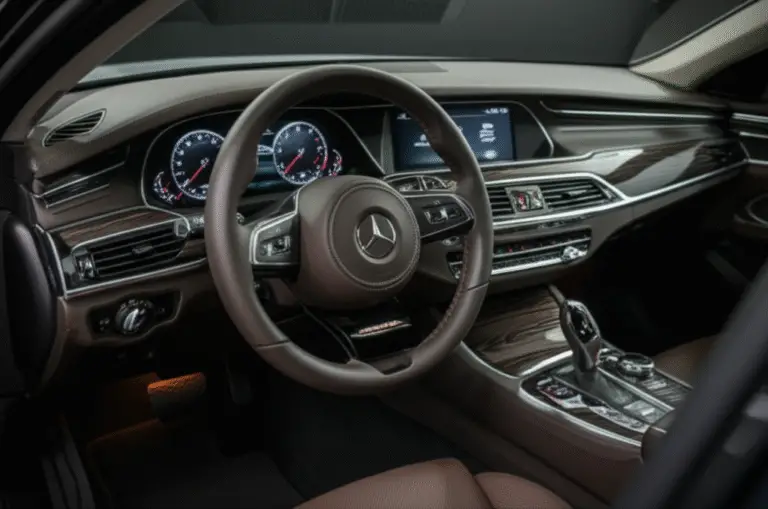
Mercedes-Benz has long been the definition of luxury comfort. The S-Class remains the gold standard for what a flagship sedan should be.
- Strategy: Agressive electrification with the EQ lineup and a focus on MBUX technology.
- Strengths: Unrivaled interior craftsmanship, smooth ride quality, and a strong brand image.
- Weaknesses: Complexity of systems and high maintenance costs.
3. BMW’s M Division and Performance Luxury
BMW has always been about the driver. Even as they go electric, the M Division ensures that performance remains at the core.
- Strategy: The Neue Klasse platform will underpin their next generation of EVs, focusing on efficiency and driving dynamics.
- Strengths: Superior handling, strong brand loyalty, and a balanced blend of comfort and sportiness.
- Weaknesses: Infotainment systems can be overwhelming, and the shift to EVs has alienated some purists.
4. Audi’s Tech-Forward Approach to High-End Driving
Audi has carved out a niche as the tech-luxury brand. Their quattro all-wheel-drive system is legendary, and their virtual cockpits are industry-leading.
- Strategy: Heavy investment in electric platforms (PE) and a focus on digital design.
- Strengths: Cutting-edge technology, sleek design, and strong all-weather capability.
- Weaknesses: Sometimes feels a bit cold compared to the warmth of a Mercedes or the soul of a BMW.
5. Porsche’s Unwavering Commitment to Sportiness
Porsche is the only brand that successfully transitioned from a pure sports car manufacturer to a luxury SUV powerhouse without losing its soul.
- Strategy: The Taycan proved that an electric car can be a true sports car. The Cayenne and Macan drive the volume.
- Strengths: Incredible driving dynamics, high resale value, and a brand that commands respect.
- Weaknesses: High price of entry and options that can quickly inflate the cost.
6. Rolls-Royce and Bentley: The Pinnacle of Ultra-Luxury
These brands operate in a different stratosphere. They are not just selling cars; they are selling art and exclusivity.
- Strategy: Moving towards electrification (Rolls-Royce’s Spectre) while maintaining the bespoke nature of their vehicles.
- Strengths: Unmatched customization, silence, and status.
- Weaknesses: Extremely high cost and limited production volumes.
7. Lucid Motors and the New Wave of American Luxury
Lucid is the new kid on the block, aiming to challenge Tesla with superior range and interior space.
- Strategy: Focus on the Air sedan, offering class-leading efficiency and luxury.
- Strengths: Incredible range, spacious interior, and high-quality build.
- Weaknesses: Limited brand recognition and a small dealer network.
8. Cadillac’s Renaissance in the US Market
Cadillac is trying to shed its “old man” image with the Celestiq and the Escalade IQ.
- Strategy: Leaning into American luxury with bold designs and electric performance.
- Strengths: Strong domestic brand loyalty, aggressive pricing, and bold styling.
- Weaknesses: Inconsistent reliability history and a struggle to compete globally.
9. Lexus: Reliability Mets Refined Comfort
Lexus continues to be the safe bet in the luxury world. They don’t chase the latest tech fads; they focus on quality and durability.
- Strategy: A balanced approach to electrification with strong hybrid offerings.
- Strengths: Top-tier reliability, excellent customer service, and high resale value.
- Weaknesses: Conservative design and infotainment systems that often lag behind competitors.
10. Genesis: The Challenger Redefining Value
Genesis is the dark horse, offering premium features at a lower price point than its German rivals.
- Strategy: “Progressive Luxury” with a focus on design and value.
- Strengths: Generous warranty, stunning design, and high value for money.
- Weaknesses: Lower brand recognition in some markets and a smaller dealer network.
👉 CHECK PRICE on:
- Tesla Model S: Tesla Official | Edmunds | Auto Trader
- Mercedes-Benz S-Class: Mercedes-Benz Official | TrueCar | CarMax
- BMW M5: BMW Official | Edmunds | CarGurus
- Porsche Taycan: Porsche Official | TrueCar | Auto Trader
- Lucid Air: Lucid Motors Official | Edmunds | Carvana
🔋 The Electric Revolution: How EVs are Reshaping Luxury
The transition to electric is the single biggest disruptor in the luxury car market. It’s not just about swapping the engine for a battery; it’s about reimagining the entire vehicle architecture.
The “Silent” Luxury
One of the most immediate changes is the noise. The absence of engine roar changes the acoustic signature of a luxury car. Brands are now investing heavily in active noise cancellation and sound design to create a serene cabin environment. The Rolls-Royce Spectre, for instance, is designed to be the quietest car in the world, proving that silence can be the ultimate luxury.
Range and Charging
Range anxiety is fading, but it’s not gone. The Lucid Air boasts a range of over 50 miles, setting a new benchmark. Meanwhile, Mercedes-Benz and BMW are rolling out 80-volt architectures that allow for incredibly fast charging. The ability to charge from 10% to 80% in under 20 minutes is becoming a key selling point.
The Software Battle
In the EV era, the car is a computer on wheels. The infotainment system is now the primary interface. Brands like Mercedes with MB.OS and BMW with their new iDrive are fighting to create a seamless, intuitive experience. The car that offers the best user experience will win the hearts of the next generation of luxury buyers.
🤖 Autonomous Driving and AI: The New Status Symbols
Gone are the days when a powerful engine was the only status symbol. Today, the ability to let the car drive itself is the new flex.
Level 3 and Level 4 Autonomy
Mercedes-Benz has already achieved Level 3 certification in certain markets, allowing drivers to take their hands off the wheel in traffic jams. BMW and Audi are following suit. The goal is to make the commute a time for relaxation, reading, or even working.
AI Assistants
The AI assistant is becoming a key differentiator. Imagine a car that knows your schedule, adjusts the climate based on your mood, and suggests routes based on your driving habits. BMW’s Intelligent Personal Assistant and Mercedes-Benz’s MBUX are leading the charge in this area.
The Trust Factor
However, trust is a major issue. Many buyers are hesitant to fully trust autonomous systems. Brands that can prove the safety and reliability of their systems will gain a significant advantage.
🌍 Regional Market Dynamics: North America, Europe, and Asia
The luxury car market is not a monolith. It varies significantly by region.
North America
The US is the largest single market, with a strong preference for large SUVs and pickup trucks. Cadillac and Lincoln have a strong foothold here. The market is also seeing a rise in electric luxury as charging infrastructure improves.
Europe
Europe is the home of luxury, but it’s also the most regulated market. Strict emissions rules are pushing brands towards electrification. The sedan is still popular here, but the SUV is gaining ground. Germany remains the powerhouse, with BMW, Mercedes, and Audi dominating.
Asia-Pacific
This is the growth engine. China is the largest luxury car market in the world, with a strong preference for long-wheelbase models and high-tech features. Local brands are rising, challenging the traditional European giants. India and Japan are also key markets, with unique preferences for reliability and fuel efficiency.
💰 Pricing Strategies and Consumer Spending Habits
Luxury car pricing is a delicate balancing act. Brands need to maintain their premium image while remaining accessible to a broader audience.
The “Entry-Level” Strategy
Many brands are using entry-level models to get customers into the brand ecosystem. The BMW 3 Series and Mercedes C-Class are often the first luxury cars for many buyers. Once they are in, they are more likely to upgrade to higher models.
The “Ultra-Luxury” Strategy
At the other end of the spectrum, brands like Rolls-Royce and Bentley are focusing on exclusivity and customization. They are not trying to sell to everyone; they are selling to the ultra-wealthy.
The Used Market
The used luxury car market is also growing. As loan terms extend and prices rise, more buyers are turning to the pre-owned market to get a luxury car at a lower cost. This is creating a new segment of affordable luxury.
🛡️ Supply Chain Challenges and Semiconductor Shortages
The luxury car industry has not been immune to the global supply chain disruptions. The semiconductor shortage has forced many brands to cut production and delay deliveries.
The Impact on Luxury
Luxury cars are often the first to be affected because they require more chips for their advanced features. This has led to longer wait times and higher prices for new vehicles.
The Future of Supply Chains
Brands are now looking to diversify their supply chains and invest in vertical integration to mitigate future risks. BMW and Mercedes are investing in their own battery production to reduce reliance on suppliers.
🧐 How to Choose the Right Luxury Brand for Your Lifestyle
Choosing a luxury car is a personal decision. It depends on your lifestyle, budget, and priorities.
For the Tech Enthusiast
If you love the latest tech and software, look at Tesla, Mercedes-Benz, or BMW. These brands are leading the way in infotainment and autonomous driving.
For the Driver
If you value handling and performance, Porsche, BMW M, and Audi are your best bets. They offer a driving experience that is hard to beat.
For the Family
If you need space and versatility, look at the SUV segment. Mercedes-Benz GLS, BMW X7, and Cadillac Escalade offer plenty of room for the whole family.
For the Reliability Seeker
If you want a car that will last, Lexus and Genesis are the top choices. They offer excellent reliability and customer service.
For the Status Seeker
If you want to make a statement, Rolls-Royce, Bentley, and Ferrari are the ultimate status symbols. They offer exclusivity and prestige that no other brand can match.
🏁 Conclusion

The luxury car market is at a crossroads. The traditional definitions of luxury are being challenged by electrification, autonomous driving, and changing consumer preferences. The brands that can adapt to these changes while maintaining their heritage and quality will thrive.
For the consumer, this is an exciting time. There are more choices than ever before, from the electric revolution of Tesla and Lucid to the performance of Porsche and BMW. Whether you value tech, performance, reliability, or status, there is a luxury car out there for you.
But remember, the best luxury car is the one that fits your lifestyle and budget. Don’t just buy a badge; buy a car that makes your life better.
Final Recommendation:
- Best All-Rounder: BMW 5 Series or Mercedes-Benz E-Class for a perfect blend of performance, comfort, and tech.
- Best EV: Tesla Model S or Lucid Air for range and software.
- Best Reliability: Lexus RX or Genesis GV80.
- Best Status: Rolls-Royce Ghost or Bentley Continental GT.
The future of luxury is bright, but it’s also changing. Stay informed, drive smart, and enjoy the ride.
🔗 Recommended Links
👉 Shop Luxury Cars on:
- Tesla: Tesla Official | Edmunds | CarMax
- Mercedes-Benz: Mercedes-Benz Official | TrueCar | Auto Trader
- BMW: BMW Official | Edmunds | CarGurus
- Porsche: Porsche Official | TrueCar | Carvana
- Lexus: Lexus Official | Edmunds | CarMax
- Genesis: Genesis Official | TrueCar | Auto Trader
❓ FAQ

What are the emerging design trends in luxury cars for the coming years?
The design trends are shifting towards minimalism and digital integration. We are seeing fewer physical buttons and more touchscreens and voice controls. The interior is becoming a “living space” with ambient lighting, premium materials, and sustainable options. Externally, aerodynamic shapes are becoming more common to improve efficiency, especially for EVs.
Read more about “🚀 8 Hidden Auto Trends (2026) You Won’t Find in Standard SEO Reports”
Are luxury car sales increasing globally or regionally?
Globally, the market is growing, but the growth is uneven. Asia-Pacific is the fastest-growing region, driven by China. North America and Europe are growing at a slower pace, but remain strong markets. The SUV segment is driving growth in all regions.
What role does technology play in shaping luxury car market forecasts?
Technology is the primary driver of future growth. Electrification, autonomous driving, and AI are reshaping the industry. Brands that can successfully integrate these technologies will lead the market. The software experience is becoming as important as the hardware.
Read more about “🏆 Which Brand of Car Sells the Most? (2026) Top 10 List”
How is consumer demand shifting in the luxury automobile sector?
Consumers are becoming more pragmatic. They are looking for value, reliability, and practicality over pure status. The SUV is preferred over the sedan. There is also a growing demand for sustainable and electric vehicles.
What are the top luxury car brands expected to perform best?
BMW, Mercedes-Benz, and Audi are expected to remain strong. Tesla and Lucid are expected to grow rapidly in the EV segment. Lexus and Genesis are expected to perform well due to their focus on reliability and value.
Read more about “🛠️ How Often to Schedule Car Repairs? The 2026 Ultimate Guide”
How are electric vehicles impacting luxury car brand trends?
EVs are forcing brands to rethink their product lines. They are investing heavily in battery technology and charging infrastructure. The performance of EVs is challenging the dominance of ICE vehicles. The software experience is becoming a key differentiator.
Read more about “The 10 Most Ticketed Cars by State in 2026 🚓”
What factors are driving growth in the luxury car market?
Urbanization, rising incomes in emerging markets, and the demand for SUVs are driving growth. Electrification and technology are also key factors. The used luxury car market is also contributing to growth.
Read more about “🚗 Brand Loyalty is Dead: 10 Reasons Buyers Are Switching (2026)”
What are the key differences in market trends and forecasts for luxury car brands in different regions, such as Europe, Asia, and North America?
Europe is focused on emissions and electrification. Asia is focused on tech and local manufacturing. North America is focused on SUVs and performance. Each region has its own unique preferences and challenges.
How do changes in consumer preferences, such as a shift towards sustainability and electric vehicles, affect the luxury car market?
The shift towards sustainability is driving the electrification of the luxury market. Consumers are increasingly looking for eco-friendly options. This is forcing brands to invest in green technology and sustainable materials.
What role does technology play in the development and marketing of luxury cars, and how will it shape the industry’s future?
Technology is the core of the future luxury car. It is driving performance, efficiency, and user experience. The software will become the primary differentiator. Marketing will focus on digital experiences and personalization.
Which luxury car brands are expected to see the most growth in the next 5 years, and why?
Tesla, Lucid, and Chinese EV brands are expected to see the most growth due to their focus on electric vehicles and technology. BMW and Mercedes-Benz are also expected to grow due to their strong brand equity and investment in electrification.
How do economic factors such as recession and inflation impact the demand for luxury cars?
Economic factors can have a mixed impact. Recession can lead to a decline in demand, but the ultra-wealthy are often less affected. Inflation can lead to higher prices and longer loan terms, which can deter some buyers. However, the used luxury car market may see an increase in demand.
What are the current market shares of luxury car brands such as Mercedes-Benz, BMW, and Audi?
BMW holds the largest market share at 23.6%, followed by Mercedes-Benz and Audi. The top 5 players control 74.8% of the market. The market is highly concentrated, with a few brands dominating.
📚 Reference Links
- BMW Group: BMW Official Website
- Mercedes-Benz: Mercedes-Benz Official Website
- Audi: Audi Official Website
- Tesla: Tesla Official Website
- Porsche: Porsche Official Website
- Lexus: Lexus Official Website
- Genesis: Genesis Official Website
- Lucid Motors: Lucid Motors Official Website
- Rolls-Royce: Rolls-Royce Official Website
- Bentley: Bentley Official Website
- Euromonitor International: Premium and Luxury Cars in France | Market Research Report
- GMI Insights: Luxury Car Market Trends and Forecasts (2025–2035)
- Car Brands™: Car Brand Statistics
- Car Brands™: Car Brand Lists
- Car Brands™: Car Brand Comparisons
- Car Brands™: Auto Industry News
- Car Brands™: Car Brand Market Shares
- Car Brands™: Car Brand Histories