Support our educational content for free when you purchase through links on our site. Learn more
🚗 Why Do Some Car Brands Get More Speeding Tickets?

What makes certain car brands more prone to speeding tickets? Usually, it’s a mix of driver behavior, vehicle performance, driving habits, and where the car is used—not the badge alone. Ticket rankings can reveal interesting patterns, but they don’t prove that a particular brand causes its owners to speed.
A quick, confidence-inspiring car can make high speeds feel surprisingly ordinary. We’ve felt it ourselves: settle into a quiet, capable sport sedan on an open highway, and the speedometer can climb faster than your sense of pace.
That’s why the right question isn’t just “Which cars rank highest?” It’s also what those rankings actually measure—and whether they account for mileage, location, and driver demographics.
Key Takeaways
- Drivers—not car brands—receive speeding tickets. Performance and handling may influence how a car feels, but they don’t determine how its owner drives.
- Ticket rankings depend on their data and methodology. A study based on insurance applicants or driver surveys may not represent every driver or citation nationwide.
- Power, driver demographics, mileage, and location can all shape the results. A high ranking doesn’t prove that a model itself causes speeding.
- Sports cars and powerful sedans can make speed feel effortless. Check your speed regularly, especially in a quiet, smooth-riding car.
- Choose a car for your needs, not its ticket-ranking reputation. Test-drive the exact model, compare insurance using your own details, and use cruise control or speed alerts where appropriate.
Table of Contents
- ⚡️ Quick Tips and Facts
- 🚘 What Does “Speeding-Ticket-Prone” Really Mean?
- Car brands, models, and driver behavior: what the data can—and can’t—show
- 📊 How Researchers Identify Cars Linked to More Speeding Tickets
- Claims data, traffic citations, and driver surveys
- Why rankings differ by study, location, and year
- 🕰️ How Car Design and Driving Culture Shape Speeding Trends
- 🏁 Car Models Often Associated With Higher Speeding-Ticket Rates
- 1. Subaru WRX
- 2. Volkswagen Golf GTI
- 3. Hyundai Genesis Coupe
- 4. Scion FR-S
- 5. Subaru BRZ
- 6. Mitsubishi Lancer
- 7. Dodge Challenger
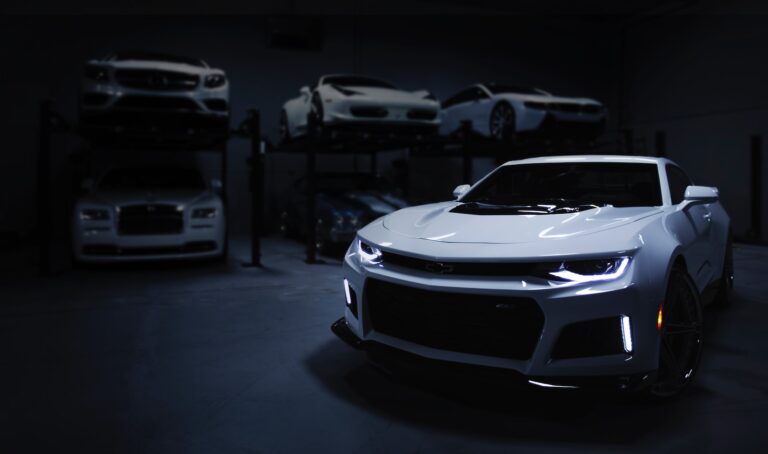
- 8. Chevrolet Camaro
- 9. Ford Mustang
- 10. Nissan 370Z
- 11. Infiniti G37
- 12. BMW 3 Series
- 13. Audi S4
- 14. Mercedes-Benz C-Class
- 15. Kia Stinger
- 🔍 Why Certain Cars Get More Speeding Tickets
- Power, acceleration, and performance-car appeal
- Handling that makes high speeds feel deceptively easy
- Vehicle visibility, color, and the attention factor
- Driver age, lifestyle, and ownership patterns
- Where you drive: highways, suburbs, and enforcement hotspots
- ⚖️ Brand Reputation Versus the Facts
- Why a ticket-rate ranking doesn’t prove a car causes speeding
- Popular myths about sports cars, luxury cars, and red cars
- 💸 Speeding Tickets, Insurance Rates, and Your Driving Record
- How citations can affect car insurance
- What to check before buying a performance car
- 🛡️ How to Avoid Speeding Tickets Without Driving Like a Robot
- Practical speed-awareness habits
- Cruise control, speed limiters, and driver-assistance tech
- What to do after receiving a speeding citation
- ✅ Choosing a Fun Car and Keeping Your Driving Record Clean
- 🏁 Conclusion
- 🔗 Recommended Links
- ❓ FAQ
- Which car brand gets the most speeding tickets?
- Are sports cars more likely to get speeding tickets?
- Do red cars get pulled over more often?
- Can a car model affect my insurance after a speeding ticket?
- Do speeding-ticket rankings account for how many cars are on the road?
- 📚 Reference Links
⚡️ Quick Tips and Facts
If you’re wondering why some makes and models show up more often in speeding-ticket rankings, start with the data—and remember that a car doesn’t get a ticket; its driver does. Our guide to car brands with the most speeding tickets looks at the rankings, while this article digs into the reasons behind them.
| Quick fact | What it means |
|---|---|
| Ticket rankings often use insurance-application data | They generally reflect the share of surveyed or insured drivers reporting a citation—not every ticket issued nationwide. |
| A high ranking doesn’t prove a brand causes speeding | Driver age, mileage, location, and vehicle choice can all influence the result. |
| Fast-feling cars may encourage speed | Strong acceleration and confident handling can make high speeds feel less dramatic. |
| Enforcement varies | Speed limits, traffic volume, road design, and local enforcement all affect citation patterns. |
| Speeding is a serious safety issue | The NHTSA identifies speeding as a major contributor to traffic deaths and crashes. |
Our quick takeaway: Treat brand rankings as an interesting clue about driver-and-vehicle patterns, not a verdict on every owner. And if your right foot is easily persuaded by a turbo badge, use the speedometer—not the scenery—as your reality check. 🏎️
🚘 What Does “Speeding-Ticket-Prone” Really Mean?
A car described as “speeding-ticket-prone” usually appears in a dataset where a relatively high proportion of its drivers reported a speeding citation. That is not the same thing as proving that the vehicle itself is more likely to be stopped, or that every owner drives quickly.
The distinction matters. A ranking might compare insurance applicants who own particular models, rather than all registered vehicles, all miles driven, or all citations issued by police. Results can also depend on the study’s sample, date range, and definition of a speeding violation.
Car brands, models, and driver behavior: what the data can—and can’t—show
When a study says a model has a high ticket rate, it may be reporting the percentage of surveyed drivers who disclosed a speeding ticket. That measure can be informative, but it does not automatically account for how far each person drives, where they drive, or how frequently they encounter speed enforcement.
A simple example: imagine two vehicles with the same number of ticketed owners. If one is commonly driven for long highway commutes and the other mostly makes short trips on local streets, their exposure to potential citations is different.
| What a ranking may measure | What it may not tell you |
|---|---|
| Share of drivers in a dataset who report a ticket | The likelihood of a ticket per mile driven |
| Differences between models in that sample | Whether the model caused the driver to speed |
| Patterns among insurance applicants | The experience of every owner nationwide |
| A snapshot from a particular period | Whether the same brands rank similarly today |
For context, the Insurance Institute for Highway Safety (IIHS) explains how vehicle and driver characteristics can intersect insurance analysis. For broader brand-related reading, explore our Car Brand Lists and Car Brand Comparisons.
📊 How Researchers Identify Cars Linked to More Speeding Tickets
Not every “most ticketed cars” list is built the same way. Some researchers analyze insurance applications; others may use citation records, surveys, or a combination of sources. The method determines what the ranking can reasonably claim.
Claims data, traffic citations, and driver surveys
Insurance-related studies can identify patterns in applicants’ self-reported driving histories. These datasets may cover many drivers, but they usually reflect the insurer’s customers or the study’s sample—not the entire driving population.
Official traffic records offer another angle, but they can be difficult to combine across jurisdictions. States and local agencies may record, classify, and share citation data differently. A citation database may also lack a clean link between a ticket and the exact vehicle model involved.
Driver surveys can help reveal ownership and behavior, but they rely on participants remembering and accurately reporting their tickets. Each method has trade-offs:
- Insurance data: useful for comparing applicants, but limited to the data provider’s sample and reporting practices.
- Citation records: closer to enforcement outcomes, but access and consistency vary by location.
- Driver surveys: can add context, but depend on responses and survey design.
- Vehicle-registration data: can help establish how common a model is, but doesn’t explain why its drivers received citations.
A useful reading habit: check whether a study says “share of drivers with tickets,” “ticket rate,” or “number of citations.” Those phrases sound interchangeable in a headline. Statistically, they aren’t.
Why rankings differ by study, location, and year
A model can move up or down a ranking without its drivers suddenly changing personality. The study may have added new applicants, changed the time period, or counted a different set of vehicles. Regional driving patterns also matter: a model popular in a state with long, high-speed commutes may have more exposure to speed checks than one mostly driven in dense urban areas.
The supplied summaries of the Chron Facebook post and the Insurify article do not expose their full article findings, so we won’t invent quotes or figures from them. A related Autoblog Facebook post about an Insurify study is similarly inaccessible in its supplied form. When the underlying methodology and numbers aren’t visible, treat the headline as a lead—not a complete source.
For more automotive reporting and market context, see our Auto Industry News and Car Brand Market Shares sections.
🕰️ How Car Design and Driving Culture Shape Speeding Trends
Car design can influence how speed feels, how a vehicle attracts attention, and which drivers choose it. But those are possible influences, not proof that a make or model independently produces more citations.
A powerful engine, quick throttle response, and secure handling can make acceleration easy. The flip side is that quiet cabins and stable suspension can make a high cruising speed feel less intense than it really is. You may be moving quickly while the car feels unbothered—like it’s carrying a cup of coffee through a library.
Driving culture matters, too. Some people buy sporty cars for track days or weekend drives; others commute in them every day. A performance model may also be more common among younger drivers in one dataset, while the same badge has a very different owner profile elsewhere.
We’ve seen that split in enthusiast circles: the same model can be a sensible, carefully maintained commuter for one owner and a tempting back-road toy for another. The badge is identical. The use case—and the driver—isn’t.
🏁 Car Models Often Associated With Higher Speeding-Ticket Rates
The models below have been associated with elevated speeding-ticket patterns in reported rankings and studies. This is a discussion of observed associations, not a universal, current ranking: dataset, year, region, and owner demographics can change the order.
The video perspective referenced in the supplied material reports that an Insurify analysis found Infiniti drivers had the highest brand-level share in that study at 8.7%, while the BMW i3 had the highest model-level share at 17.6%. It also reports Cadillac at 5.4%, Tesla at 5%, and Volvo at 2.7% among the lower brand-level rates. Those figures should be read as belonging to that particular reported dataset—not as live, nationwide odds for every owner. See the featured video and the Insurify study page; the supplied page summary does not provide enough accessible methodology to independently verify the underlying sample here.
| Model | Why it may appear in speeding-ticket discussions | Enthusiast perspective |
|---|---|---|
| Subaru WRX | Turbocharged performance and a strong enthusiast following | Responsive and engaging, but easy to drive more briskly than a commute requires |
| Volkswagen Golf GTI | Quick, practical hatchback with sporty tuning | A clever all-rounder; its understated shape can hide its pace |
| Hyundai Genesis Coupe | Rear-drive sports-coupe character | A performance-oriented package that appeals to drivers who enjoy spirited acceleration |
| Scion FR-S | Lightweight, rear-drive sports-car appeal | More about balance and driver involvement than brute force |
| Subaru BRZ | Rear-drive handling and an enthusiast-focused reputation | A reminder that nimble handling can tempt you to carry speed through corners |
| Mitsubishi Lancer | Some versions have an energetic, rally-inspired image | The badge covers a broad range of trims, so model and engine matter |
| Dodge Challenger | Muscle-car styling and available high-output powertrains | Big presence and strong acceleration; a heavy foot can turn a short gap into a speed warning |
| Chevrolet Camaro | Sports-coupe performance and strong acceleration | Capable and confidence-inspiring, which makes careful speed monitoring worthwhile |
| Ford Mustang | Long-standing performance-car culture | A fun car with many powertrain choices, from everyday-friendly to seriously quick |
| Nissan 370Z | Rear-drive sports-car character | Compact, focused, and engaging—qualities that can encourage spirited driving |
| Infiniti G37 | Powerful luxury-sport positioning | Comfort and performance in one package can make high-speed cruising feel effortless |
| BMW 3 Series | Sport-sedan tuning and a broad range of performance levels | A great driver’s car, but refinement can disguise speed |
| Audi S4 | Strong acceleration with all-weather capability | Secure traction is useful; it can also encourage drivers to underestimate pace |
| Mercedes-Benz C-Class | Some trims combine luxury with substantial performance | A composed cabin can make fast driving feel calmer than it is |
| Kia Stinger | Sport-sedan performance and a practical liftback body | A quick grand-tourer that can cover ground smoothly—and quietly |
How to read this table: It describes the kinds of vehicles that show up in discussions about ticket patterns, not a verified ranking of current citation rates. The model year, trim, driver, and where the vehicle is driven all matter.
1. Subaru WRX
The Subaru WRX is a rally-inspired sport sedan with a reputation for quick response and confident handling. That combination is a joy on the right road, but it can make acceleration feel like a small request rather than a big event.
- Why it draws attention: performance heritage, enthusiast ownership, and brisk acceleration.
- Potential benefit: responsive power and engaging handling.
- Potential drawback: the car can make everyday driving feel more entertaining than the speed limit intended.
- Our tip: use the speed limiter or cruise control on open roads, and save the playful driving for legal, controlled settings.
2. Volkswagen Golf GTI
The Golf GTI is a practical hatchback with a sportier side. It’s comfortable enough for commuting and lively enough to make an empty on-ramp feel like an invitation.
That dual nature may help explain why it appears in enthusiast conversations. The GTI doesn’t need dramatic styling to feel quick, so drivers may focus on the drive rather than how fast the speedometer is climbing.
- Benefit: everyday versatility with engaging performance.
- Drawback: easy-to-use power can tempt repeated bursts of acceleration.
- Best habit: glance at your speed after merging, not just at traffic.
3. Hyundai Genesis Coupe
The Genesis Coupe brought a rear-drive sports-coupe layout to a broader audience. Its sporty identity and available performance make it a natural fit for discussions about spirited driving.
As with any model spanning different years and specifications, the exact engine and trim matter. A nameplate alone doesn’t tell you how fast a particular vehicle accelerates—or how its owner drives.
4. Scion FR-S
The Scion FR-S became known for lightweight, rear-wheel-drive fun. It isn’t only about straight-line speed; the appeal is the way the car responds to steering and throttle inputs.
That can create a different kind of temptation: carrying more speed through bends because the car feels balanced. Public roads aren’t a substitute for a track, though, and a confident chassis can’t change sightlines, grip, or posted limits.
5. Subaru BRZ
The Subaru BRZ shares the FR-S’s enthusiast-friendly formula: rear-drive handling and a focus on driver involvement. The enjoyable part is often precision, not raw horsepower.
- Benefit: a nimble, communicative driving experience.
- Drawback: a playful chassis can encourage overconfidence on twisty roads.
- Our advice: keep spirited driving to a legal track or closed course; on public roads, leave room for the unexpected.
6. Mitsubishi Lancer
“Lancer” covers a range of versions, from ordinary compact sedans to more performance-focused models. That makes broad comparisons tricky: a model-family label may combine cars with very different power, equipment, and driver appeal.
If you’re researching one, check the exact model year, trim, and engine rather than assuming every Lancer has the same performance character.
7. Dodge Challenger
The Dodge Challenger is a modern muscle-car icon, with bold styling and a history of high-output trims. Not every Challenger is the same, but the name naturally comes with performance expectations.
The benefit is obvious: big-car comfort, strong presence, and serious acceleration in some versions. The drawback is equally clear: it can be easy to enjoy that power too enthusiastically. A heavy car moving quickly also needs space and attention, not just a confident right foot.
8. Chevrolet Camaro
The Chevrolet Camaro pairs a sporty shape with capable performance. Drivers may appreciate its acceleration and handling, while others may find the seating position and outward visibility take adjustment.
That trade-off is worth understanding before buying. A test drive should include parking, lane changes, and ordinary traffic—not just a quick blast around the block.
9. Ford Mustang
The Ford Mustang has been a familiar performance-car name for generations. Its wide range of versions means a base model and a high-performance trim shouldn’t be treated as identical vehicles.
- Benefit: broad appeal, strong enthusiast community, and a range of driving experiences.
- Drawback: acceleration can arrive quickly, especially if you’re used to a slower daily driver.
- Practical check: learn how throttle response feels before merging into fast traffic.
10. Nissan 370Z
The Nissan 370Z is a compact rear-drive sports car designed around driver engagement. Its focused character can make a short trip feel like a little event—which is part of the charm and a reason to stay disciplined about speed.
11. Infiniti G37
The G37 blends luxury with sport-sedan performance. In the reported Insurify figures described above, Infiniti ranked highest among brands in that specific study, with 8.7% of drivers reporting a speeding ticket. That is a study-specific figure, not proof that Infiniti owners everywhere receive the most citations.
The car’s mix of comfort and power may help explain the association, but so might driver demographics, model popularity, and exposure to enforcement. We trust the figure only as a result attributed to that dataset—not as a universal probability.
12. BMW 3 Series
The BMW 3 Series is a benchmark sport sedan, and different versions offer very different performance levels. Its balanced handling and refined cabin can make speed feel smooth and controlled.
That’s good engineering. It is also a reason to pay attention to the speedometer, especially on long, open roads where the scenery may not tell you much.
13. Audi S4
The Audi S4 combines strong performance with a composed, all-weather character. Secure traction can help the car feel planted, but grip doesn’t make speeding safer or eliminate stopping distance.
Use the S4’s capability for smooth, controlled driving—not as a reason to assume the road is safer at higher speeds.
14. Mercedes-Benz C-Class
The Mercedes-Benz C-Class includes a variety of trims and powertrains. Many versions emphasize comfort and refinement; performance-oriented variants add a more urgent edge.
In a quiet, well-insulated cabin, speed can feel less dramatic. That’s a comfort feature, not a substitute for checking your pace.
15. Kia Stinger
The Kia Stinger paired a practical liftback shape with sport-sedan performance. Its long-distance comfort and confident power delivery can make it a capable grand tourer, though relaxed cruising can also make it easy to drift above the limit.
The best approach is simple: enjoy the smoothness, but keep a regular eye on your speed.
🔍 Why Certain Cars Get More Speeding Tickets
There isn’t one magic explanation. A vehicle’s performance, its typical owner, the roads it travels, and how researchers collect their data can all overlap. Let’s separate the likely influences from the assumptions.
Power, acceleration, and performance-car appeal
More horsepower doesn’t automatically mean more citations. It can, however, make a car accelerate rapidly and reach high speeds with less effort. Drivers who buy performance models may also be more interested in spirited driving.
The key distinction: horsepower describes capability, not behavior. A powerful car driven calmly may be less likely to receive a ticket than a modest car driven aggressively.
Handling that makes high speeds feel deceptively easy
Good handling, stable suspension, quiet interiors, and smooth transmissions can reduce the sensation of speed. That can make drivers less aware of how quickly they’re covering ground.
We’ve felt this on long highway drives: a composed car can make the pace seem relaxed, while the speedometer tells a different story. Comfort is not a speed gauge.
Vehicle visibility, color, and the attention factor
Bright colors and dramatic styling may be more noticeable, but that doesn’t establish that police target a particular color or model for speeding. The more direct factors are the speed observed, the road conditions, local enforcement practices, and the officer’s discretion.
The NHTSA’s speeding guidance focuses on driving behavior and safety risks rather than paint color. If you’re choosing a car, select a color you like; don’t treat a subdued shade as a legal invisibility cloak. 🕵️
Driver age, lifestyle, and ownership patterns
A model’s owners may differ from those of another model in age, commute length, typical trip, or driving experience. Those factors can affect citation rates independently of the vehicle.
Researchers and readers should be cautious about confounding variables: when two things occur together, a third factor may help explain the association. If a sporty model attracts more young drivers in a particular sample, the result may reflect both the car’s appeal and the owners’ driving exposure—not just its performance.
Where you drive: highways, suburbs, and enforcement hotspots
A driver who spends many hours on busy highways has more exposure to speed checks than someone making occasional short trips. Local speed limits, road design, congestion, and enforcement activity also vary.
That’s why a vehicle’s ticket rate should ideally be considered alongside mileage and location. Without that context, a raw percentage can tell an entertaining story—but not the whole one.
⚖️ Brand Reputation Versus the Facts
Performance brands attract attention, and attention can become a shortcut for assumptions: “sports car means speeding,” “luxury car means fast,” or “red car means ticket.” The data rarely supports such simple rules.
Why a ticket-rate ranking doesn’t prove a car causes speeding
A ranking shows an association within a dataset. To argue that a particular car causes more speeding, a study would need to rule out other explanations, such as:
- Driver mix: age, experience, and risk tolerance.
- Driving exposure: annual mileage and time spent on high-speed roads.
- Geography: different speed limits and enforcement patterns.
- Vehicle availability: how common the model is in the sample.
- Study design: reporting period, sample size, and how tickets are counted.
If those factors aren’t controlled, the ranking can be useful for curiosity but weak as a causal claim. The distinction is central to interpreting automotive research—and to avoiding a headline that outruns its evidence.
Popular myths about sports cars, luxury cars, and red cars
- Myth: Sports cars automatically get more tickets. They may attract drivers who enjoy performance, but the owner and use pattern matter.
- Myth: Luxury cars are always driven faster. Comfort and power can make speed feel easy, but many owners drive conservatively.
- Myth: Red cars get pulled over more. We need reliable evidence before treating color as a meaningful cause; the supplied sources do not establish one.
- Myth: A low-powered car can’t be ticketed for speeding. Any vehicle can exceed a posted limit.
For deeper context on how vehicle brands and market patterns differ, see our Car Brand Histories and Car Brand Comparisons.
💸 Speeding Tickets, Insurance Rates, and Your Driving Record
A citation can affect more than the day’s mood. Depending on your state, insurer, driving history, and violation, it may influence insurance premiums or remain on your driving record for a period set by local rules.
How citations can affect car insurance
Insurers assess risk using factors that vary by state and company. A speeding ticket may lead to a premium change at renewal, but there is no single increase that applies to every driver or brand. The seriousness of the violation and your prior record can matter more than the badge on your hood.
For general information, consult your state’s department of motor vehicles and your insurer. The Insurance Information Institute explains that auto-insurance pricing depends on multiple factors. A vehicle’s make and model may affect coverage costs, while a driver’s record can affect how the insurer evaluates risk.
What to check before buying a performance car
Before buying a car known for strong acceleration or sharp handling, ask yourself:
- Will the power suit my daily driving? Test it in ordinary traffic, not only on a clear road.
- Can I see the speed easily? Check instrument readability and driver-display settings.
- Does the car offer speed assistance? Look for cruise control, a limiter, or speed-limit alerts.
- What are the insurance requirements? Get quotes based on your own record and the exact model.
- Is the car comfortable at legal speeds? A good performance car should still feel rewarding without driving aggressively.
Enjoying a fast car responsibly isn’t a contradiction. It’s the difference between choosing the car for its engineering and asking it to make every public road your personal test track.
🛡️ How to Avoid Speeding Tickets Without Driving Like a Robot
Safe speed management doesn’t require staring at the dashboard every second. It does require building habits that keep the limit in your awareness, especially when traffic opens up.
Practical speed-awareness habits
- Set your pace early. Check the posted limit when entering a new road or changing zones.
- Use cruise control where appropriate. It can help maintain a steady speed on open roads; don’t use it in conditions that make it unsafe.
- Watch for changing limits. Work zones, school areas, and weather can call for slower driving.
- Leave extra following distance. Tailgating can make speed changes harder to manage.
- Recheck after merging or overtaking. Acceleration often happens while your attention is focused elsewhere.
- Plan for the route. Rushing because you’re late is a poor co-pilot.
- Avoid relying on traffic flow alone. If surrounding cars are speeding, matching them may still exceed the limit.
The NHTSA recommends obeying speed limits and adjusting speed to road and weather conditions. That last part matters: the posted limit is a maximum under suitable conditions, not a promise that every speed is safe.
Cruise control, speed limiters, and driver-assistance tech
Depending on the vehicle and trim, useful tools may include:
- Cruise control: maintains a selected speed in appropriate conditions.
- Speed limiter: helps prevent acceleration beyond a set speed.
- Speed-limit display or alert: reminds you of detected or mapped limits.
- Navigation prompts: can help flag a change in road conditions or speed zones.
These systems are aids, not legal shields. Cameras and map databases can misread a sign or lag behind a change; the driver remains responsible for following the actual posted limit.
What to do after receiving a speeding citation
If you receive a ticket:
- Read the citation carefully. Check the alleged violation, response deadline, and court or payment instructions.
- Keep the paperwork. Save the citation, any photos or documents, and notes about the location and circumstances.
- Review local rules. Procedures vary by state and jurisdiction; use official court or DMV resources.
- Consider your options. Depending on local law, you may be able to contest the ticket or seek an eligible driving course.
- Contact your insurer if needed. Ask how the violation may affect your policy and when any change could apply.
We can’t tell you how to handle a specific case without knowing your jurisdiction, but missing a deadline is rarely a winning strategy. Verify the instructions with the relevant court or government agency.
✅ Choosing a Fun Car and Keeping Your Driving Record Clean
You don’t need to avoid a whole brand because one study places it high on a ticket list. Instead, choose the vehicle that suits your needs and think honestly about how you’ll use its performance.
| Your priority | What to consider |
|---|---|
| Daily comfort | Cabin noise, visibility, seating, and ease of driving at ordinary speeds |
| Performance | Acceleration, handling, braking, and whether the power is appropriate for your experience |
| Lower distraction | Clear instruments, useful driver-assistance settings, and straightforward controls |
| Insurance planning | Your driving record, exact model and trim, location, and insurer |
| Responsible enjoyment | Track or closed-course opportunities rather than pushing limits on public roads |
Our confident recommendation: buy the car you genuinely want, but don’t buy a reputation or a ranking. Test-drive the exact version, understand its performance, check insurance with your own details, and build speed-awareness habits before the car’s smoothness starts making 80 feel like 60.