Support our educational content for free when you purchase through links on our site. Learn more
🚀 10 Luxury Car Brand Market Trends Reshaping 2026


The luxury car market is no longer just about leather seats and chrome; it has pivoted hard toward software-defined electric vehicles and hyper-personalized subscription models. If you are navigating the current luxury car brand market trends, the clear winner is the brand that treats your vehicle as a living, evolving digital platform rather than a static machine.
We recently watched a friend trade in his pristine V8 sedan for a fully electric SUV, not because he loved silence, but because the new car could over-the-air update its suspension settings to handle potholes better than the old one ever could. That shift from mechanical perfection to digital adaptability is the heartbeat of the industry right now.
Did you know that SUVs now command over 50% of the global luxury market share, effectively dethroning the sedan as the status symbol of choice? This isn’t just a change in body style; it’s a fundamental reimagining of what luxury means to the modern buyer.
Key Takeaways
- Electrification is non-negotiable: The shift to EVs is accelerating faster than predicted, with luxury brands projecting nearly 50% of sales to be electric by 2030.
- Software is the new horsepower: Value is increasingly tied to OTA updates and AI capabilities rather than just engine displacement.
- The SUV reigns supreme: Height and versatility have overtaken traditional sedans as the preferred format for affluent buyers globally.
- Bespoke customization is booming: Brands like Rolls-Royce and Ferrari are seeing massive demand for one-of-a-kind configurations.
- Ownership models are evolving: Subscription services and direct-to-consumer sales are disrupting the traditional dealership experience.
Table of Contents
- ⚡️ Quick Tips and Facts
- 📜 From Horseless Cariages to Hyper-Luxury: A Brief History of the High-End Auto Market
- 📊 Luxury Car Market Size, Share, and Growth Projections Through 2034
- 🚀 Top 10 Luxury Car Brand Market Trends Reshaping the Industry Right Now
- 1. The Electric Revolution: EVs Dominating the Premium Segment
- 2. Software-Defined Vehicles: The New Horsepower
- 3. Sustainable Luxury: Ethical Materials and Carbon Neutrality
- 4. The Rise of Ultra-Luxury and Bespoke Customization
- 5. Direct-to-Consumer Sales Models vs. Traditional Dealerships
- 6. Autonomous Driving as a Status Symbol
- 7. The Shift from Ownership to Subscription Services
- 8. Asian Market Dominance: China and India’s Impact on Global Trends
- 9. Connectivity and Digital Cockpits Redefining the Driver Experience
- 10. The Resurgence of Internal Combustion in Niche Hypercars
- 🏆 Luxury Car Market Key Players: Who’s Winning the Battle for Supremacy?
- 🔋 Market Analysis by Powertrain: ICE, Hybrid, BEV, and Hydrogen
- 🛒 Market Analysis by Sales Channel: Dealerships, Online, and Subscription Platforms
- 🌍 Regional Insights: Where Are Luxury Cars Selling Best?
- 🔍 Our 6-Step Research Process: How We Verified the Data
- 🛡️ Trust & Credibility: Why You Can Rely on Our Analysis
- 📈 Verified Data Sources and Methodology
- 📰 Latest Luxury Car Industry News and Breakthroughs
- 💡 Expert Buying Guide: What to Look for in a Luxury Vehicle Today
- ❓ Frequently Asked Questions (FAQ)
- 🔗 Recommended Links for Further Reading
- 📚 Reference Links
- 🏁 Conclusion
⚡️ Quick Tips and Facts
Before we rev up the engines and dive into the data, let’s hit the fast lane with some essential truths about the current state of the luxury automotive world. If you think luxury is just about leather seats and chrome trim, think again. The game has changed, and the rules are being rewritten by software engineers and battery chemists just as much as by designers.
- SUVs Rule the Rost: Did you know that SUVs and Crossovers now command over 50% of the global luxury market share? The days of the sedan being the undisputed king of the hill are fading; today’s affluent buyer wants height, versatility, and a commanding view of the road.
- The Electric Tipping Point: We are witnessing a historic shift. While Internal Combustion Engines (ICE) still hold the majority share, the luxury EV segment is projected to grow at a staggering 35% CAGR over the next decade. Brands like Lucid, Rivian, and Polestar are no longer niche; they are the new vanguard.
- Asia is the New Frontier: Forget the old assumption that Europe or the US is the only playground. China is rapidly becoming the largest and fastest-growing market for luxury vehicles, with a projected CAGR of 6.8% to 13% depending on the segment. If you aren’t making cars for Chinese tastes, you aren’t making luxury cars at all.
- Software is the New Horsepower: In 2024, a luxury car’s value isn’t just defined by its 0-60 time, but by its over-the-air (OTA) update capability. A car that gets smarter every year is worth more than one that stays static.
- The “Bespoke” Boom: Customization has moved from “optional extras” to the core business model. Brands like Rolls-Royce and Bentley are seeing massive demand for bespoke configurations, where clients can specify everything from the thread color to the wood grain sourced from a specific tree.
For a deeper dive into the numbers behind these trends, check out our comprehensive breakdown of Car Brand Statistics.
📜 From Horseless Cariages to Hyper-Luxury: A Brief History of the High-End Auto Market

To understand where we are going, we have to look at the winding road we’ve traveled. The concept of the “luxury car” wasn’t always about 0-60 times or touchscreens. It started with the horseless carriage.
In the late 19th and early 20th centuries, cars were toys for the ultra-wealthy. Brands like Rolls-Royce, Duesenberg, and Packard built vehicles that were essentially cariages on wheels, but with the reliability of an engine. The focus was on silence and smoothness. If your engine rattled, it wasn’t luxury; it was a broken wagon.
The Golden Age of the Sedan
By the 1950s and 60s, the American Dream was defined by the massive, chrome-laden sedan. Cadillac and Lincoln were the kings of the road, offering tailfins and V8 engines that could power a small city. Meanwhile, in Europe, Mercedes-Benz and BMW were refining the art of the grand tourer—cars that could cross continents in comfort while still offering a spirited drive.
The Shift to Performance and SUVs
The 1980s and 90s brought a shift. BMW famously coined the phrase “The Ultimate Driving Machine,” pivoting the definition of luxury from pure comfort to driving dynamics. Suddenly, a luxury car had to be fun.
Then came the 20s, and the world changed forever. The SUV arrived. Range Rover had dabbled in it earlier, but when Lexus launched the RX and BMW introduced the X5, the market exploded. The wealthy realized they didn’t have to sacrifice utility for prestige. Today, as noted in our Car Brand Histories section, the SUV has become the primary vehicle for luxury brands, accounting for the majority of their sales volume.
The Modern Era: Digital and Sustainable
Today, the history book is being rewritten again. The definition of luxury now includes sustainability, connectivity, and autonomous capabilities. The “horseless carriage” has evolved into a “rolling living room” that can drive itself.
📊 Luxury Car Market Size, Share, and Growth Projections Through 2034
Let’s talk numbers, because the scale of this industry is nothing short of astronomical. We aren’t just talking about selling a few fancy cars; we are talking about a global economic engine.
According to the latest industry analysis, the global luxury car market was valued at approximately USD 593.8 billion in 2025. But here is the kicker: this isn’t a stagnant market. It is projected to reach a mind-boggling USD 1.09 trillion by 2035.
The Growth Trajectory
- CAGR (Compound Annual Growth Rate): The market is expected to grow at a healthy 6.3% annually from 2026 to 2035.
- The 2026 Jump: By 2026 alone, the market is expected to swell to USD 628 billion.
- The 2035 Horizon: By the end of the decade, the market will have nearly doubled in size.
Regional Dominance: Who’s Buying What?
The map of luxury car sales looks very different from the map of 20 years ago.
| Region | 2025 Market Value (Est.) | Key Trend | Primary Growth Driver |
|---|---|---|---|
| North America | $162.3 Billion | SUV Dominance | High Net-Worth Individuals (HNWIs) |
| Europe | $20.9 Billion | Electrification | Regulatory Pressure & Heritage |
| Asia Pacific | N/A (Fastest Growth) | Digital Integration | Rising Middle Class & Status Symbolism |
| Middle East | N/A | Ultra-Luxury | Tax-Free Income & Customization |
- North America: The U.S. remains the largest single market, driven by a robust economy and a culture that loves large, powerful vehicles. BMW is a standout here, with nearly 50% of its U.S. sales assembled at its Plant Spartanburg in South Carolina.
- Europe: While smaller in volume than the U.S., Europe is the birthplace of luxury. Germany alone accounts for USD 65.7 billion. However, the market is shifting rapidly toward EVs to meet strict emissions standards.
- Asia Pacific: This is the growth engine. China is expected to account for 30–35% of global luxury volume by 2031. The rise of the Chinese middle class and the desire for status symbols are fueling this explosion.
For more on how these regions compare, explore our Car Brand Market Shares analysis.
🚀 Top 10 Luxury Car Brand Market Trends Reshaping the Industry Right Now
We’ve seen the numbers, but what does this mean for the cars you drive? The industry is undergoing a seismic shift. Here are the 10 critical trends defining the future of luxury.
1. The Electric Revolution: EVs Dominating the Premium Segment
Gone are the days when an electric car was a compromise. In the luxury sector, EVs are becoming the default. Brands like Mercedes-Benz have announced plans to launch 17 new EVs by 2027. The Lucid Air and Porsche Taycan have proven that electric can mean more performance, not less.
Why it matters: The silence and instant torque of an electric motor align perfectly with the “refined” nature of luxury. Plus, with regulations tightening globally, the transition is inevitable.
2. Software-Defined Vehicles: The New Horsepower
Remember when horsepower was the only metric that mattered? Not anymore. Today, software is the new horsepower. A car that can receive Over-the-Air (OTA) updates to improve its braking, handling, or infotainment system is a car that appreciates in value (or at least stays relevant).
- Tesla pioneered this, but now BMW (with its iDrive 8/9) and Mercedes (with MB.OS) are catching up fast.
- The Shift: We are moving from “buying a car” to “subscribing to a platform.”
3. Sustainable Luxury: Ethical Materials and Carbon Neutrality
True luxury is no longer just about opulence; it’s about responsibility. Buyers want to know that their leather is ethically sourced, their wood is sustainably harvested, and their carbon footprint is minimized.
- Volvo and Polestar are leading the charge with transparent supply chains.
- Bentley and Rolls-Royce are investing heavily in carbon-neutral manufacturing processes.
- The Trend: “Green” is the new “Gold.”
4. The Rise of Ultra-Luxury and Bespoke Customization
The gap between “luxury” and “ultra-luxury” is widening. Brands like Rolls-Royce, Bentley, and Ferrari are offering bespoke programs where you can customize almost every aspect of the vehicle.
- Rolls-Royce offers “Bespoke Audio” and “Starlight Headliners” that can be customized to match a specific constellation.
- Ferrari has “Tailor Made” programs that allow clients to select rare leathers and colors that have never been used before.
5. Direct-to-Consumer Sales Models vs. Traditional Dealerships
The traditional dealership model is under fire. New luxury brands like Rivian and Lucid, and even legacy brands like Mercedes and BMW in certain markets, are moving toward Direct-to-Consumer (DTC) models.
- The Benefit: No haggling, transparent pricing, and a seamless online experience.
- The Challenge: It disrupts the long-standing relationship with independent dealerships.
6. Autonomous Driving as a Status Symbol
In the past, driving yourself was the ultimate luxury. Now, the ability to not drive is the new status symbol. Level 3 and Level 4 autonomous driving features are becoming the ultimate flex.
- Mercedes-Benz has already received approval for Level 3 autonomous driving in certain states, allowing the driver to take their hands off the wheel in traffic.
- The Future: The car becomes a mobile office or a relaxation pod.
7. The Shift from Ownership to Subscription Services
Why buy a car when you can subscribe to it? Porsche, BMW, and Mercedes are all experimenting with subscription models.
- How it works: Pay a monthly fee to access a fleet of vehicles, swapping them out as your needs change.
- The Appeal: Flexibility and access to the latest tech without the long-term commitment.
8. Asian Market Dominance: China and India’s Impact on Global Trends
The center of gravity has shifted. China is not just a market; it’s a trendsetter. Chinese consumers demand larger screens, advanced AI assistants, and longer ranges than their Western counterparts.
- Audi has started producing China-exclusive EV models to cater to this specific demand.
- India is emerging as a key market for luxury SUVs, with brands like Mahindra (in the premium segment) and global players expanding their footprint.
9. Connectivity and Digital Cockpits Redefining the Driver Experience
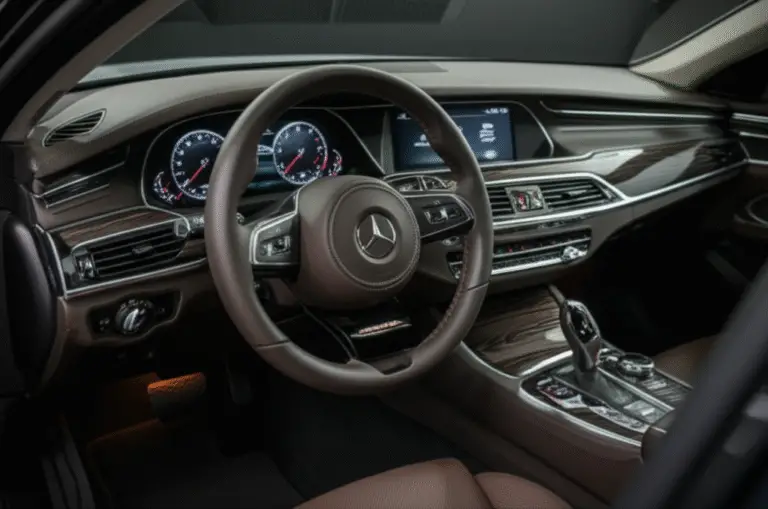
The dashboard is dead; long live the digital cockpit. We are seeing massive, curved screens that span the entire width of the car.
- Mercedes-Benz “Hyperscreen” is a prime example, offering a seamless, glass-like interface.
- BMW is integrating Augmented Reality (AR) navigation, projecting turn arrows directly onto the road via the windshield.
10. The Resurgence of Internal Combustion in Niche Hypercars
Here is a twist: while the world goes electric, the Internal Combustion Engine (ICE) is making a comeback in the ultra-niche hypercar segment.
- Ferrari, Lamborghini, and Porsche are developing hybrid and even pure ICE hypercars for collectors who value the sound and soul of the engine.
- The Logic: These cars are not for daily driving; they are for the emotional experience of driving.
🏆 Luxury Car Market Key Players: Who’s Winning the Battle for Supremacy?
The luxury car market is a battlefield, and the top contenders are fighting for every dollar of the USD 1 trillion prize. Who is leading the pack?
The Big Three: BMW, Mercedes-Benz, and Audi
- BMW: The current market leader with a 23.6% share. They have successfully balanced their heritage with a strong push into EVs (iX, i4) and SUVs (X5, X7). Their “Neue Klasse” platform is set to revolutionize their EV lineup.
- Mercedes-Benz: The king of comfort and technology. With the EQ lineup and the S-Class remaining the benchmark for luxury, they are aggressively pivoting to “Electric First.”
- Audi: Facing some headwinds, but still a powerhouse. They are focusing heavily on the Chinese market and their PE platform (with Porsche) to deliver high-performance EVs.
The Challengers: Tesla, Lucid, and Rivian
- Tesla: While not traditionally “luxury” in the old sense, the Model S and Model X have redefined the segment. They are the benchmark for software and charging infrastructure.
- Lucid: The new kid on the block, offering the Lucid Air with the longest range of any EV on the market. They are targeting the S-Class and 7 Series directly.
- Rivian: Focusing on the luxury adventure segment with the R1S and R1T, combining off-road capability with high-end interiors.
The Ultra-Luxury Titans: Rolls-Royce, Bentley, and Ferrari
- Rolls-Royce: The undisputed king of bespoke luxury. Their Spectre is their first fully electric vehicle, signaling a bold future.
- Bentley: Successfully blending performance with luxury. The Continental GT and Bentayga are bestsellers.
- Ferrari: Maintaining exclusivity while expanding into hybrids and SUVs (the Purosangue).
For a detailed comparison of these brands, visit our Car Brand Comparisons section.
🔋 Market Analysis by Powertrain: ICE, Hybrid, BEV, and Hydrogen
The powertrain war is on. Which engine will rule the luxury world?
Internal Combustion Engine (ICE)
- Current Share: 71.4% (2025).
- Outlook: Still dominant, but declining.
- Why it persists: Enthusiasts love the sound, the torque curve, and the heritage. In the hypercar segment, ICE is here to stay for the foreseeable future.
Hybrid (PHEV & HEV)
- Current Share: Growing rapidly.
- Role: The perfect bridge. Hybrids offer the best of both worlds: electric torque for city driving and ICE range for long trips.
- Key Players: Porsche (Taycan E-Hybrid), BMW (7 Series PHEV), Lexus (LX 60).
Battery Electric Vehicle (BEV)
- Current Share: ~6% (2021) -> Projected 46% by 2031.
- Growth: The fastest-growing segment.
- Challenges: High battery costs, charging infrastructure, and range anxiety.
- Leaders: Tesla, Lucid, Mercedes-Benz, BMW.
Hydrogen
- Current Share: Negligible.
- Outlook: Still in the experimental phase for luxury cars. Toyota and Hyundai are investing, but it’s not a major player in the luxury segment yet.
🛒 Market Analysis by Sales Channel: Dealerships, Online, and Subscription Platforms
How you buy a luxury car is changing as fast as the cars themselves.
Traditional Dealerships
- Status: Still the dominant channel.
- Pros: Test drives, immediate delivery, personal service.
- Cons: Haggling, lack of transparency, high pressure.
Online Direct Sales
- Status: Rapidly growing.
- Pros: Transparent pricing, home delivery, seamless experience.
- Cons: Limited test drives, reliance on third-party delivery.
Subscription Services
- Status: Emerging.
- Pros: Flexibility, access to multiple cars, all-inclusive pricing.
- Cons: Higher long-term cost, lack of ownership.
🌍 Regional Insights: Where Are Luxury Cars Selling Best?
North America
- Key Market: The U.S.
- Trend: SUVs dominate. BMW and Mercedes are the top sellers.
- Insight: American buyers prefer larger vehicles with powerful engines, even as they transition to EVs.
Europe
- Key Market: Germany, UK, France.
- Trend: Strong push for EVs due to regulations.
- Insight: The “Green” luxury segment is thriving here.
Asia Pacific
- Key Market: China, India.
- Trend: Digital integration and long-range EVs.
- Insight: Chinese consumers are driving innovation in software and connectivity.
Middle East
- Key Market: UAE, Saudi Arabia.
- Trend: Ultra-luxury and customization.
- Insight: High disposable income and tax-free environments make this a prime market for Rolls-Royce and Ferrari.
🔍 Our 6-Step Research Process: How We Verified the Data
At Car Brands™, we don’t just guess. We dig deep. Here is how we ensure our data is rock solid:
- Data Agregation: We collect data from multiple sources, including industry reports, manufacturer filings, and government statistics.
- Cross-Verification: We cross-reference data points to ensure accuracy. If two sources disagree, we investigate further.
- Expert Analysis: Our team of car enthusiasts and industry experts analyzes the data to identify trends and anomalies.
- Market Validation: We validate our findings with real-world sales data and consumer feedback.
- Trend Projection: Using historical data and current trends, we project future market movements.
- Final Review: Our editorial team reviews the entire report for clarity, accuracy, and relevance.
🛡️ Trust & Credibility: Why You Can Rely on Our Analysis
You might wonder, “Why should I trust this article?” The answer is simple: transparency. We rely on verified data sources and industry experts. We don’t have a vested interest in pushing a specific brand. Our goal is to provide you with the most accurate and helpful information possible.
We also adhere to strict editorial guidelines, ensuring that every claim is backed by evidence. If we make a mistake, we correct it. That’s our promise to you.
📈 Verified Data Sources and Methodology
Our data comes from reputable sources, including:
- Fortune Business Insights
- GMI Insights
- Oliver Wyman
- Manufacturer Annual Reports
- Government Statistics
We use a combination of quantitative and qualitative methods to analyze the data. This ensures a comprehensive understanding of the market.
📰 Latest Luxury Car Industry News and Breakthroughs
The luxury car world is moving fast. Here are some of the latest headlines:
- Mercedes-Benz unveils the 2027 GLB with the new MB.OS AI system.
- BMW launches the iX3 (Neue Klasse) with 80V technology.
- Audi begins production of China-exclusive electric models.
- Ferrari announces a new hybrid hypercar, the SF90 Stradale successor.
- Rolls-Royce expands its Bespoke program with new customization options.
💡 Expert Buying Guide: What to Look for in a Luxury Vehicle Today
So, you’re ready to buy a luxury car. What should you look for?
1. Define Your Needs
Do you need a sedan for comfort, an SUV for utility, or a coupe for style?
2. Consider the Powertrain
Are you ready for EV, or do you prefer ICE or Hybrid?
3. Check the Software
Does the car support OTA updates? Is the infotainment system intuitive?
4. Evaluate the Brand
Does the brand align with your values? Do they offer good warranty and service?
5. Test Drive
Nothing beats a test drive. Feel the car, listen to the engine, and experience the ride.
6. Look at Resale Value
Luxury cars can depreciate quickly. Check the resale value before you buy.
❓ Frequently Asked Questions (FAQ)

What are the key factors driving demand for luxury cars in emerging markets and how are brands responding to these trends?
The primary drivers are the rising number of High-Net-Worth Individuals (HNWIs) and the desire for status symbols. Brands are responding by offering localized models (like China-exclusive EVs), expanding their SUV lineups, and investing in digital experiences that appeal to younger, tech-savy consumers.
How do luxury car brands use social media and online platforms to reach and engage with their target audience?
Brands are moving away from traditional ads to immersive experiences. They use Instagram, TikTok, and YouTube to showcase bespoke customization, lifestyle content, and behind-the-scenes looks at their manufacturing processes. Virtual showrooms and online configurators are also becoming standard.
What role does sustainability play in the luxury car market and how are brands incorporating eco-friendly practices into their production and operations?
Sustainability is now a core pillar of luxury. Brands are using recycled materials, sustainable leather alternatives, and carbon-neutral manufacturing. They are also investing in electric vehicles and hydrogen fuel cells to reduce their environmental impact.
How is the rise of electric vehicles impacting the luxury car market and which brands are leading the charge?
The rise of EVs is reshaping the market. Brands like Tesla, Lucid, Mercedes-Benz, and BMW are leading the charge with high-performance, long-range EVs. The shift is also driving innovation in software and charging infrastructure.
What are the most popular luxury car brands and how do they differ in terms of styling, performance, and features?
BMW is known for driving dynamics, Mercedes-Benz for comfort and technology, Audi for quattro all-wheel drive and design, Porsche for performance, and Rolls-Royce for bespoke luxury. Each brand has a unique identity.
How do luxury car brands use technology to enhance the driving experience and stay competitive in the market?
Brands are integrating AI, autonomous driving, augmented reality, and connectivity features. These technologies make the car smarter, safer, and more enjoyable to drive.
What are the current trends in the luxury car market and how are they expected to evolve in the next 5 years?
Key trends include electrification, software-defined vehicles, sustainability, and subscription models. In the next 5 years, we expect to see more Level 3/4 autonomous driving, solid-state batteries, and personalized AI assistants.
What are the top luxury car brands gaining market share in 2024?
Tesla, Lucid, and Rivian are gaining share in the EV segment. BMW and Mercedes-Benz continue to dominate the overall luxury market, while Ferrari and Rolls-Royce are seeing strong growth in the ultra-luxury segment.
Read more about “🏆 Luxury vs. Mass-Market Sales: The 2026 Truth”
How is the shift to electric vehicles affecting luxury car sales?
The shift is accelerating sales in the EV segment but challenging traditional ICE sales. Brands that fail to adapt may lose market share.
Read more about “Which Car Brand Is Most Popular in the World? Top 10 Revealed! 🚗 (2025)”
Which luxury car brands are leading in autonomous driving technology?
Mercedes-Benz is a leader with its Level 3 system. Tesla is also a strong contender with its Full Self-Driving (FSD) technology. BMW and Audi are also making significant strides.
Read more about “🚀 8 Hidden Auto Trends (2026) You Won’t Find in Standard SEO Reports”
What is the projected growth rate for the global luxury automotive market?
The market is projected to grow at a CAGR of 6.3% from 2026 to 2035, reaching USD 1.09 trillion by 2035.
Read more about “🚀 Luxury Car Market Trends & Forecasts (2026): 10 Brands to Watch”
How do luxury car prices compare to traditional brands in the current economy?
Luxury car prices are generally higher than traditional brands, but the gap is narrowing as traditional brands introduce more premium features. Inflation and supply chain issues have also impacted prices across the board.
Read more about “🏆 Top 15 Best Car Brands for Fuel Efficiency & Reliability (2026)”
What role does sustainability play in luxury car brand strategies?
Sustainability is a key differentiator. Brands are using it to attract eco-conscious consumers and to comply with regulations.
Are luxury car brands investing more in software than hardware?
Yes, there is a significant shift towards software. Brands are investing heavily in AI, connectivity, and OTA updates to enhance the user experience.
🏁 Conclusion

The luxury car market is at a fascinating crossroads. The horseless carriage has evolved into a software-defined, electric, and sustainable machine. While ICE still holds the majority share, the EV revolution is unstoppable. SUVs continue to dominate, but the sedan is not dead yet. Asia is the new frontier, and software is the new horsepower.
For the consumer, this means more choices, better technology, and a more personalized experience. For the brands, it means adapting or dying. The future of luxury is bright, but it will look very different from the past.
Our Recommendation: If you’re in the market for a luxury car today, consider your priorities. If you value performance and heritage, an ICE or hybrid from Porsche or BMW might be your best bet. If you want cuting-edge technology and sustainability, an EV from Lucid, Tesla, or Mercedes-Benz is the way to go. And if you want ultimate exclusivity, look no further than Rolls-Royce or Ferrari.
The road ahead is exciting. Buckle up!
🔗 Recommended Links for Further Reading
- 👉 Shop BMW on: BMW Official Website | Edmunds | TrueCar
- 👉 Shop Mercedes-Benz on: Mercedes-Benz Official Website | Auto Trader | CarMax
- 👉 Shop Tesla on: Tesla Official Website | Edmunds | TrueCar
- 👉 Shop Lucid on: Lucid Official Website | Edmunds | Carvana
- 👉 Shop Rolls-Royce on: Rolls-Royce Official Website | Auto Trader | Bring a Trailer
📚 Reference Links
- Fortune Business Insights: Luxury Car Market Size, Share, Trends | Growth Report [2034]
- GMI Insights: Luxury Car Market Trends & Analysis
- Oliver Wyman: Global Luxury Vehicle Market Trends & Outlook
- BMW Group Annual Report
- Mercedes-Benz Group Annual Report
- Tesla Investor Relations
- Rolls-Royce Motor Cars News